
Journalism 'in perilous position', MEN editor tells MPs
Plus: Making a Difference campaign winners announced
The dominance of the big tech platforms has left journalism in a 'perilous position', the editor of the Manchester Evening News told MPs last night.
Sarah Lester was speaking at the News Media Association's annual parliamentary reception to mark Journalism Matters week.
She called for a fairer relationship between tech platforms and news publishers as AI summaries eat away at publisher revenues, while simultaneously feeding off journalistic content.
The House of Commons event also saw the announcement of the winners of the public vote for the best newspaper campaign of the past year - the 'Making a Difference' award.
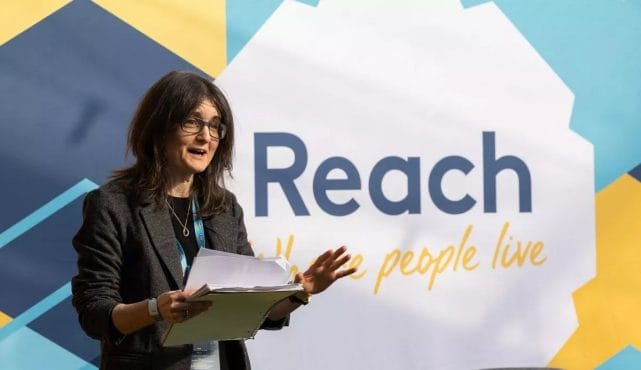
Said Sarah, pictured: "I think journalism is in a perilous position, and we are in danger of sleepwalking into losing something fundamental to our democracy,” Sarah said. “There is no question that journalism matters.”
"The problem is that we do not have a level playing field. We, and by that, I mean trusted, regulated publishers across the country, stand out from the AI slop and skewed political narratives that increasingly dominate the information landscape.
"But we need the government to recognise that vibrant local journalism is not an optional extra or a luxury. We need a fairer relationship between publishers and digital platforms.
"We need to protect public notices as a means of informing communities. And we need to confront legal intimidation, including strategic lawsuits against public participation, or SLAPPs, designed to silence public-interest reporting."
Sarah was speaking after Prime Minister Andy Burnham described local journalism as "part of the infrastructure of a healthy country" in an article published across numerous regional titles yesterday.
It came ahead of an expected announcement of the first tranche of recipients from the £6m a year Local News Fund, set up as part of the government’s local media action plan in March.
Also speaking at last night's event, Labour MP John Cooper said: “Political support for journalism must be more than warm words, it must translate into policy that helps it thrive.
"That means looking at decisions across government through the lens of the impact on a free, pluralistic and sustainable press from digital markets and AI to the future of the BBC and policies affecting local news.
NMA chief executive Theo Bamber added: "If the government is serious about unity and common purpose, as Andy Burnham set out when he came to power in July, it must also be serious about ensuring journalism can thrive.
"Because our industry is a pillar of democracy and a lynchpin of the cohesive, strong and open society the government wants to build.
"We are not asking for handouts, but policy that meets today’s challenges head on.
"That means bold action on digital markets to take publishers out from under the thumb of global technology companies. It means retaining public notices to support local news as more power is devolved. And it means stopping the wealthy from using lawfare to muzzle reporters in the courts."
The parliamentary reception, hosted by Sir John Whittingdale, also saw the announcement of the winners of this year’s Making a Difference public vote for the best national, and local and regional news media campaigns of the past year.
The Best Regional or Local Campaign was won by The National’s ‘Refugees Are Welcome Here’ highlighting the positive contributions refugees make to communities across Scotland.
It emerged victorious from a total of 21 local and regional newspaper campaigns originally shortlisted for the prize.
Winner of the Best National Campaign was the i Paper’s ‘Killer Kitchens’ investigation exposing how engineered stone is leaving workers with incurable lung disease.



