
Departing Reach journalists share farewell posts
Experienced staff leave publisher amid ongoing cutbacks
Journalists leaving Reach plc amid the publisher's ongoing cutbacks have shared farewell posts on social media.
The media giant is reducing its headcount by 160 in a fresh round of cuts, on top of 50 roles which were lost to voluntary redundancy during the summer.
The departures include some of the group's most experienced journalists, with combined service totalling decades.
They include Gary Rogers, who is leaving his role as newsroom transformation director after 42 years in the industry, and Jonathan MacPherson, chief reporter at Lancashire Live.
Posting on LinkedIn, Gary wrote: "The news industry has been a turbulent place to work but has offered me a rich and varied professional life.
"I’ve been a local newspaper reporter, sub editor, TV news producer, editor, newsroom consultant, data journalist, start-up entrepreneur, AI pioneer, and finally a newsroom transformation director. I have been very fortunate.
"I have tried to approach the job with a smile and an aim to be kind to those I encountered. If I failed you, forgive me. I’d like to think I was having an off day!
"After 42 years it may be time to stop. But I’ll take a couple of months to ponder. As my career has often felt guided by Mr Micawber, there’s a chance that ‘something will turn up’."
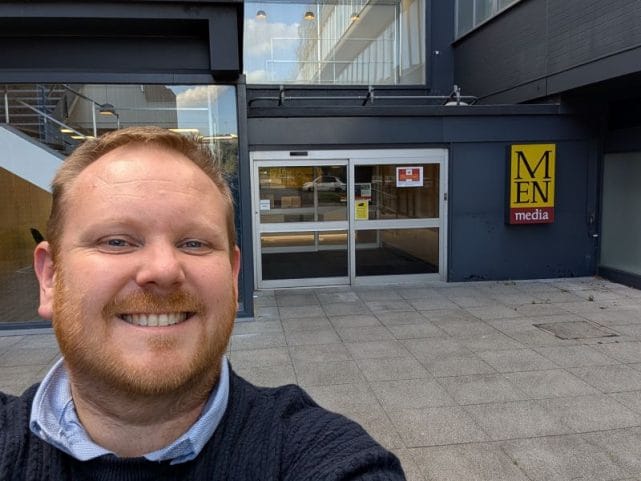
Jonathan, pictured, took voluntary redundancy after 16 years with Reach, the last seven at LancsLive, and has since joined Lancashire Police as a press and PR officer.
He wrote: "When I first joined in August 2010, I was a wet-behind-the-ears trainee reporter with plenty to learn after just graduating from university.
"I'm so grateful to have worked alongside so many talented and dedicated journalists and editors over the years. They have taught me so much and helped shape me into the reporter and person I am today.
"I'm really looking forward to taking on a new challenge and seeing the world of communications from the other side. It's a big change, but one I'm incredibly excited about."
Paul Fisher, who was head of audio and video at Reach Scotland, is leaving the company after five years following its decision to close Aberdeen Live.
He posted: "When I moved to the city five years ago, little did I know what was in store but we built something good, something worth talking about and if the timing had been a bit different, I am sure it would be continuing.
"My time in the video team has been exceptional, we have grown many platforms and offered consumers a different way of consuming news and sport, and I know the team will continue that work to push new boundaries in Scotland.
"I don't know what comes next for me, having welcomed our second child just six weeks ago, the timing is both a blessing and a curse."
Also leaving after 14 years is regional sub-editor Simon Payne, whose job disappeared as part of a plan to axe the equivalent of 24.2 regional print production posts originally announced in July.
Wrote Simon: "Daunting yet exciting, entering the jobs market feels a lot different this time round to half a lifetime ago. There are plenty of questions to ask and lots of advice to seek - do I stick to the same path or explore new avenues?
"It was a pleasure working with so many fine colleagues at Reach for more than a decade. I especially have so much respect for my fellow print sub-editors who pored over the pages of the south-east regional titles for many years, and those who continue to work wonders week in, week out.
"To all those former colleagues who have also recently left the company, or who are currently in consultation, I wish you well."
Reach's chief content officer David Higgerson has put the current round of job losses down to a "mammoth shift" in how audiences consume content, accompanied by declining page views driven by Google algorithm changes and an "expansionist" BBC.
He has previously said: "We have reduced a range of non-people budgets in order to protect as many jobs as possible, but the scale of the challenge facing our wider industry is such that we have to enter next year a smaller editorial organisation."



