
More than 200 jobs set to go at Reach in new cost-cutting drive
Three online newsbrands to be closed
More than 200 editorial jobs are set to go at Reach plc in a fresh cost-cutting drive which will also see the closure of three titles.
Last autumn saw the axing of a net 186 posts in what the company said at the time was it's 'biggest-ever' restructure, while earlier this year a further 80 roles were placed at risk.
Now a new tranche of redundancies is in prospect amid the ongoing fallout from declining search referral traffic and falling ad revenues.
It is expected that around 220 journalism jobs will go with around 60 new ones set to be created - a net editorial headcount reduction of 160.
The latest round of cutbacks will include the closure of three online newsbrands - Aberdeen Live, Galway Beo and Kent Live.
Chief content officer David Higgerson said in an email to staff this morning that the decision was based on the company's market position in those areas.
Aberdeen Live was launched in July 2021 as a standalone online brand to challenge DC Thomson's two daily newspapers in the city, the Press & Journal and the Evening Express.
By contrast Kent Live covered an area where Reach already had established newspaper brands, but was up against a strong competitor in the shape of Iliffe Media's Kent Online.
It is understood that the areas set to be hardest hit by the job cuts are the group's national titles, its central editorial functions, and its regional titles in the South East and West Midlands.
However the publisher's 'heartlands' in Manchester, Liverpool, Wales, the North East and the East Midlands will be less impacted.
David wrote in his email: "We are in the middle of a mammoth shift in how audiences want content and journalism. To ensure a sustainable future for our journalism, we must focus our investment in the areas where our audiences spend the most time and where our revenue reflects the value of our work.
"In our newsrooms, that means less emphasis on story volume and more on original journalism and distinctive brands. It also means that ‘active engaged time’ will become our north star metric, over and above page views, by the end of the year.
"Our page view decline has been driven primarily by a decline in Google referrers. Locally, we continue to be challenged by an expansionist BBC, whose local output mirrors what is already being created by publishers up to 70% of the time.
"These headwinds, and others which also affect the whole industry, mean that we need to make these changes while also reducing our overall costs.
"I, along with the editorial senior leadership team, have reduced a range of non-people budgets in order to protect as many jobs as possible, but the scale of the challenge facing our wider industry is such that we have to enter next year a smaller editorial organisation.
"Today’s proposals mean that we are removing approximately 220 roles from our editorial structure, while at the same time creating more than 60 editorial roles.
"The roles being created are ones which are needed to drive digital revenue growth, particularly in subscriptions and in longer-form video, and enhance brand reputation through well-read journalism which creates loyalty.
"We are also taking the difficult decisions to close three titles: KentLive, AberdeenLive and GalwayBeo. This is not a reflection of the work done on these titles, or the commitment of the journalists on them. The decision is based on our market position in these areas.
"In almost every market we operate in, locally, we are the dominant publisher, even after the page view declines we have seen this year.
"This is not the case in these three markets, which is why we are taking the decision to exit them, while focusing efforts on the markets where we make the greatest impact."
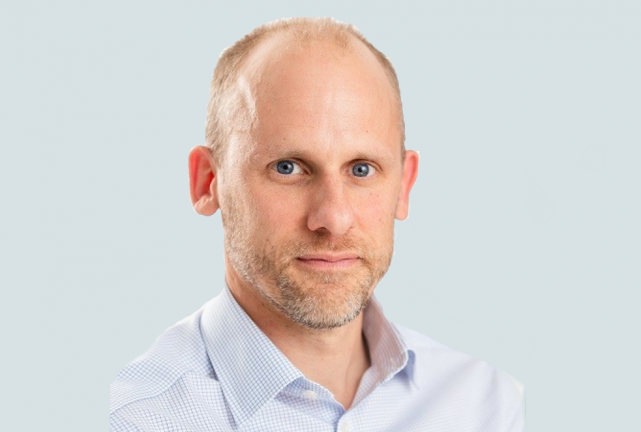
The fresh bout of cost-cutting was foreshadowed by chief executive Piers North, pictured, in his report accompanying the company's half yearly results published in July.
He wrote: "Our decisive cost actions in 2025 and continued cost focus resulted in adjusted operating costs declining by 10pc, and we expect to drive a similar level of savings across the second half of the year.
"This will include reductions to some teams, as well as other savings such as third-party contracts, including the lower print production volumes."
The half-yearly results showed overall revenues down 9pc and digital revenues down 11.4pc, while page views were 40pc down year-on-year.
The National Union of Journalists has condemned the cuts as an "act of self-sabotage", pointing out that Reach has forecast operating profits of £96m this year.
General secretary Laura Davison said: "The cumulative effect of relentless redundancies has been unsustainable workloads, unrealistic 'content' demands, and dedicated journalists living in constant fear of losing their livelihoods.
“Continued cuts fundamentally undermine Reach's recent strategic pivot to digital subscriptions and focus on original reporting, which had been broadly welcomed by our members.
"This is an act of self-sabotage. A sustainable business model relies on quality journalism. And quality journalism relies on having skilled journalists who can ask questions, uncover stories, verify facts, hold power to account, and reflect community voices.
"Redundancies are not the answer. If Reach has demonstrated one thing in the last year, it is that constant cost-cutting does not work.
"Instead of propping up operating profits and paying out dividends to shareholders, the company should invest in its journalists and focus on an emergency rescue plan to give the business the breathing space it needs.
"The NUJ is seeking a detailed breakdown of the company's proposals and will be engaging in formal consultations next month.
"We will hold a meeting for all members at Reach in the coming days and will be supporting them throughout this difficult time."



