
Top judge paves way for greater online access to court hearings
Concerns voiced over local papers' ability to cover courts
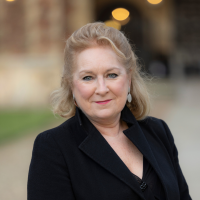
One of the UK's most senior judges has paved the way to give journalists greater online access to court hearings in a move designed to help the local press.
Speaking at yesterday's Society of Editor's conference, Lady Chief Justice Baroness Carr announced the formation of a new Transparency and Open Justice Board, to be chaired by Mr Justice Nicklin.
Its brief will be to modernise the approach to open justice, taking account of those being affected by court procedure including journalists.
It will cover all courts and tribunals and set objectives "timely and effective access" in terms of listings, availability of documents and public hearings, with a particular focus on increasing public and media access.
Baroness Carr, pictured, told the conference: "I am already on the record as a firm believer in the fundamentally important role that a free, robust, high-quality, and rigorously independent local, regional, and national press has in our civic society.
"It is that role that I would very much like to see strengthened and invigorated in a legal context, particularly where the local and regional press are concerned, so that it can continue its crucial role in scrutinising the justice system as well as it does the other branches of the state.
"With all this in mind I am very much concerned to ensure you have the tools to scrutinise the justice system effectively. To this end I am establishing a new Transparency and Open Justice Board, chaired by Mr Justice Nicklin.
"It will be looking in particular at what can be done to increase public and media access. That our courts are open to the press is as important as being open to the public."
She went on: "Pressures on the press, and particularly local press, all too often mean that court reporting is not a priority. Local press used to play an important role in reliable, accurate court reporting; they knew the local staff and knew the local judges. Open, trusting and collaborative relationships were forged.
"But financial pressures on the media are, I am sure, an ever-increasing concern just as they are for the justice system; and one that may see journalists have to focus on other areas than the courts. This may particularly be the case where court reporting would require journalists to travel between courts to find good, newsworthy stories, of which there are many every day.
"One development that the new Board will explore further in order to help promote increased access and reporting, is making online attendance at hearings easier.
"This will, amongst other things, ensure that you have access to advance information about hearings – so you know which proceedings are being heard, and where and when."
Earlier the conference heard calls for a series of measures to improve relations between the police and the media - including requiring police press officers to answer the phone.
Tessa Chapman, chief correspondent for 5 News, said: "The relationship at the moment is not healthy, it is fractured. We know when we talk about police-media relations there was a chilling after Leveson and it hit rock bottom with the Nicola Bulley case in Lancashire."
Rebecca Camber, chair of the Crime Reporters Association, said: "Lots of police forces no longer have the telephone numbers or email addresses of their press officers on their websites. The reason for that is that some forces don't even answer the phone.
"Some forces no longer respond to emails, they just put out releases on their websites. Having that relationship [with individual press officers] is vital. All police press officers should answer the phone."
During the session Newsquest's London investigations editor Charles Thomson gave two examples where police policies on dealing with the media had hampered local press coverage.
Said Charles: "I cover the Met, and the Met has a policy banning its officers from talking to the press without press office approval. A few weeks ago, I was working on a big story about a case which had a named officer assigned to it.
"The press officer went AWOL so I rang the officer. Fifteen minutes later I get the hairdryer treatment from the press officer saying 'what are you doing? You know our policy is that you are not to talk to officers without our approval. That policy ended up sabotaging the story and we had to delay publication."
In another example, Charles cited an instance where Essex Police had used social media rather than a local newspaper to get a story out.
He said: "There's a problem with the police thinking they don't need the press and they can just use social media, only putting things on Facebook and not putting out a press release.
"For instance when a woman's body washed up in Southend with her head wrapped in gaffer tape, the police only put it out on Facebook and didn't put out a press release.
"When I spoke to the [press office] about this he said that he had a KPI to get it out to as many people as possible. When I told him how many people followed our newspaper he was astonished.
"If you want to get a story in front of lots of eyes, you still need the local press. Unfortunately there's an attitude among some officers that they don't need us."
For a full run-down of what happened at the conference, see our live blog.



