
Study: Journalism not seen as 'competitive sport' thanks to UK-wide reporting scheme
Project wins praise in report on collaboration between journalists
An investigative reporting project involving regional newspapers across the country has helped break down the idea of journalism being a "competitive sport", according to a new study.
Researchers at the University of Oxford have praised collaborative journalism schemes such as The Bureau Local, a network involving hundreds of journalists, technologists, community-minded citizens and specialist contributors.
The Bureau Local, run by the Bureau of Investigative Journalism, was one of three European schemes examined for the study, and the resulting report, entitled Case Studies in Collaborative Local Journalism, has been published today by the university's Reuters Institute for the Study of Journalism.
In one chapter of the report, authors Joy Jenkins and Lucas Graves examined the benefits and challenges of collaboration between different types of newsrooms, organisations and locations.
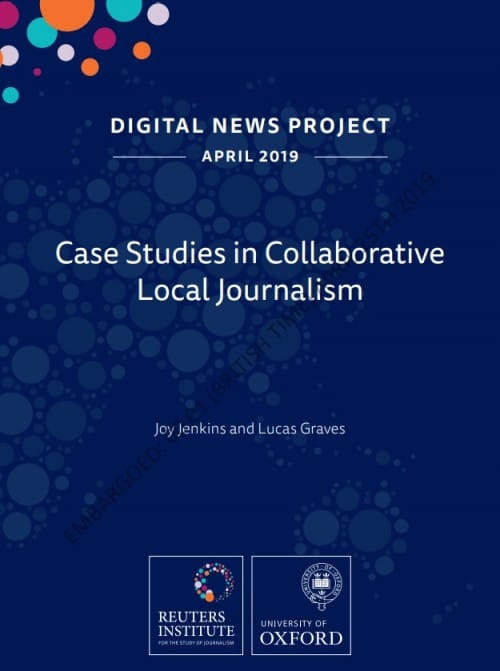
The report's authors wrote: "The editors, journalists, and others involved in collaboration... emphasised the value of uniting diverse types of actors in news production, which can yield better journalism.
"Rachel Hamada, a community organiser for the Bureau Local, said network members, both journalists and non-journalists, teach one another, particularly how to use data effectively in reporting, and offer mentorship.
"This focus has helped to break down views of journalism as a ‘competitive sport’, she said, with journalists from newspapers owned by large legacy publishers working alongside journalists from digital start-ups and locally owned outlets."
However, they added: "But collaboration also requires that participants subscribe to the larger expectations of the project or initiative and trust that other participants, particularly those working for competing news organisations, will do the same.
"This constraint was particularly evident in the UK, where a few national companies dominate the local newspaper landscape, potentially edging out journalists working for independent publishers, hyperlocal news sites, or on a freelance basis."
Lancashire Post news editor Emma Pearson was among those to be interviewed for the study.
Of how the Bureau Local had been received initially by the Post's then-owner Johnston Press, she told the researchers: "There were some people within the organisation who were slightly wary of it.
"I think, because obviously all newspapers work for separate groups, you’re always in competition with each other, so there’s a natural instinct to mistrust outsiders, but the Bureau was so obviously different and independent and funded differently – it wasn’t cutting across us in any way – so I think after that people kind of got to see that it wasn’t threatening to us in any way."
Summing up the report, Dr Jenkins said: "Collaboration has emerged as an important strategy allowing journalists to work together to report on important issues facing their communities while also benefiting from knowledge-sharing, pooled resources, mentorship, and enhanced reach.
"Although many challenges for local journalism remain, these initiatives demonstrate a willingness among participants to embrace innovative strategies that reach across geographic and organisational lines."



