
Shorthand still an essential skill, say regional editors
But one daily news chief predicts it will 'soon become obsolete'
Shorthand remains an essential skill for would-be journalists even though it may "soon become obsolete", according to a group of regional editors.
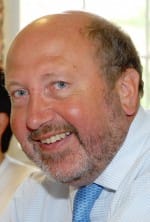
Peter Sands, left, the former Northern Echo editor who now works as an editorial consultant, recently carried out a survey of 20 national and regional editors to test attitudes to shorthand.
The results, set out in a piece for industry journal InPublishing, revealed a wide consensus that it remains an essential skill - at least for the time being.
However one leading regional daily editor, the Liverpool Echo 's Maria Breslin, predicted that it would soon be rendered obsolete by technological advances.
Said Maria: "I have no doubt shorthand will become obsolete in the near future but think we should tread carefully until that point.
"While it is still required in some, though ever-decreasing, parts of the industry we should persevere in making it appear relevant to students who want to keep their options open.”
Sarah Lester, editor of the Manchester Evening News, said: “I wouldn’t hire a senior reporter without shorthand. There are, however, some roles in the newsroom that don’t need it, such as social video journalists so we need to be able to train and develop journalists along different pathways.
"It is important that journalists don’t cut themselves off from one route by deciding they don’t want to learn shorthand because it’s a bit hard.”
James Mitchinson, editor of the Yorkshire Post, agreed that it was up to individual journalists to decide, depending on what sort of career path they wanted to follow.
He said: "Whether or not shorthand is important depends on whether you want to be a journalist that can do everything or a journalist that doesn’t and can’t. There is no shame in wanting to specialise in something that will never, ever require shorthand.
“Then there are employment tribunals, court hearings, inquests. Matters of public interest carried out in public settings, the details of which can only be captured by someone trained and qualified in shorthand. The content creator, with no shorthand, must sit those stories out.
“I think that it is for each individual, setting out on their career path, to decide for themselves. However, if you want to do it all, from serious public interest journalism to the multi-format experience pieces, you have to have all of the tools.”
But both Sheffield Star editor Claire Lewis and Northern Echo editor Gavin Foster regarded it as a must.
Said Claire: "I think reporters these days simply have to be all-rounders. And without shorthand, I struggle to see how they can be. All my reporters know that they can be called upon to cover court and inquests, for which shorthand is essential.”
Added Gavin: “I absolutely still see it as an essential skill. Technology can’t always be relied upon and batteries run out! And until courts become fully open to recording proceedings, then it is the only way I can be confident that reporters can take full verbatim notes.
"Editors at Newsquest still insist upon it. And if reporters haven’t got it, they need to work towards it.”
The one dissenting voice in Peter's 'survey' was Amanda Bourn, editor of National World’s northern weeklies. For her, shorthand isn’t a prerequisite:
She said: “A candidate stands out if they have shorthand on their CV but a lot of interviewing is done over the phone, not face-to-face, so reporters can easily record the conversations if they need an accurate note. There are apps which will record the chat and transcribe the conversations back for you.
“The Local Democracy Reporters cover councils for us, agencies provide court copy and a lot of meetings or hearings are recorded so they can be watched back at the reporter’s leisure. Starting work as a trainee reporter without shorthand skills was unfathomable thirty years ago, but we are not producing the same content as we did back then.
"Now, I think it’s more important to have video skills, to constantly ‘think pictures’, to have a sixth sense for the type of content which will resonate with your audience and to adopt a holistic approach when it comes to producing it."
In his piece, Peter concluded: "I asked the twenty editors to list the top attributes / skills they look for when taking on a new starter. Just over half of the editors put attitude in first place. I couldn’t agree more.
"So, there you have it ... a good attitude is vital and shorthand is hugely important. It will certainly do you no harm to have both."



