
Report calls for new deals with BBC, big tech and councils to save local news
Cash should go to smaller news providers, says foundation
A wide-ranging report on the future of local news is calling for 'new settlements' with the BBC, big tech and local government to save the industry.
The Public Interest News Foundation claims that more than 4m people in the UK live in 'news deserts' - defined as local authority districts with no dedicated local news outlet, in print, online, radio or television.
In a report published today entitled Regenerating Local News, it argues that this state of affairs is endangering democracy itself and puts forward a six point plan to tackle it.
Some of its key proposals envisage redirecting funding away from corporate media outlets to smaller local news providers, by reforming public notices and the local democracy reporter scheme.
The report describes the current BBC-funded LDR scheme as a "sticking plaster, not a cure" and argues that it may actually have harmed media plurality.
It says: "The LDR service...was agreed in a side deal between the BBC and the News Media Association (NMA). Most of the funding flows to NMA members National World, Newsquest and Reach, although other local news providers are able to republish LDR content.
"It helps to create employment for local journalists and leads to the publication of news stories about local democracy, but it does nothing to ensure the long-term health of local news ecosystems.
"In fact, by directing public funds towards three corporate news providers, it has arguably inhibited plurality in local news."
Instead, the report suggests the BBC should share financial resources with all local news providers, where these complement the BBC's services by providing high-quality local journalism.
This would see the corporation become a local news aggregator rather than a direct provider in some areas, only playing a more active role where independent provision does not exist.
The report is also scathing about the current system of distributing public notices cash, echoing comments made by Mill Media boss Joshi Herrmann in the wake of the recent closure of Rochdale Online.
It says: "By law, public notices must be placed in newspapers that are printed at least once a fortnight, regardless of the quality of these papers, where they are owned or whether they include a meaningful proportion of genuinely local news.
"The upshot of this is that £40-70m flows annually into the revenues of companies which retain print editions of their legacy local newspaper titles. Although this revenue is sometimes celebrated as a means of keeping local news alive, there is no guarantee that it is actually invested in local journalism.
"Reform of the public notice regime could redirect tens of millions of pounds annually to independent local news providers."
Other key recommendations in the report include a £150m local news stimulation fund, underwritten by the government, which would provide up to £15m a year in funding for local news initiatives between now and 2035.
And it calls for a "new settlement" between big tech firms and local news, using the Digital Markets, Competition and Consumers Act 2024 to ensure that digital data and revenues are shared equitably between big tech and news providers.
The report was carried out by PINF on behalf of the Local News Commission, which consists of leading figures from the public, private and voluntary sectors.
It says the UK is facing a series of interlinked crises, each of which would pose a major challenge but which collectively poses "an existential risk to society as a whole."
"Commitment to democracy is fragile, particularly among younger people, and trust in institutions is low. Disinformation is rife, contributing to community tensions and even violence," it says.
"Hundreds of local newspapers have closed, and thousands of local journalists have lost their jobs, leaving local communities without a voice or a forum for dialogue.
"More than four million people live in news deserts, which tend to be in deprived areas. Most people get their news via social media and are unwilling to pay for professional journalism.
"At the same time, communities and journalists are coming together to create new forms of local news. There is an emerging ecosystem of informative and empowering local news, but it is extremely fragile.
"The Local News Commission believes that healthy local news ecosystems – and therefore thriving communities – should be developed around local news providers that are accountable, sustainable, in the public interest, innovative, representative and engaging.
"This means forging a new relationship between local news providers and their communities, so that local news creates real social value and people are willing to support their local news providers in financial or non-financial terms."
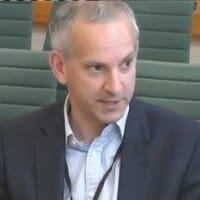
PINF executive director Jonathan Heawood, pictured, said: “President Donald Trump says London is unrecognisable, having opened its doors “to jihad.” Elon Musk thinks he knows what to do about justice in Oldham.
"We know that’s not the real story - and so do local communities across the UK, who have organised and raised awareness for decades to defend the truth.
"But in an era of misinformation - the kind that crafts deepfakes, manipulates networks, and starts riots - things are changing. The truthtellers are fast disappearing.
"UK news shouldn’t be an oligarch’s plaything. With a vibrant local news ecosystem, it doesn’t need to be. Publishers can create jobs again. Outlets can build sustainable, innovative business models. And local journalists can do what they do best - hold the powerful to account.”
Commenting on the report, a BBC spokesperson said: “Local Democracy Reporters generate thousands of stories from local council areas across the UK every month for a wide range of local news outlets.
"We’ll read the report with interest and continue to work with partners to deliver for our local audiences.”



