
Regional Press Awards winners: What the judges said
Judges commend 'local journalism at its finest'
The biggest prizes in regional journalism were handed out yesterday as the annual Regional Press Awards took place in London.
Among the big winners were the Liverpool Echo with three awards including Large Newsbrand of the Year and the Belfast Telegraph which also won a trio of prizes including Daily Reporter of the Year for Allison Morris.
Many of the winners were described as exemplifying regional journalism at its finest and giving great hope for the future of the industry.
Here's what the judges had to say about each of them.
Young Journalist of the Year: James Holt, Manchester Evening News

In just three years as a reporter at the Manchester Evening News, James Holt has established himself as a vital part of the newsroom, “demonstrating many competencies from sourcing and breaking exclusives to digital journalism”, according to judges.
They were blown away by his body of work: from breaking the national exclusive video of two men being kicked by police at Manchester airport, to discovering wifi servers being hacked across UK train stations and a gun being found in the bathroom of a glamorous, celebrity-attended restaurant launch.
James also carried out exclusive interviews and developed new lines on the disappearance of Jay Slater on the ground in Tenerife, which judges said showed "a reporter capable of handling national and international-level stories under pressure”.
And he was praised by police for his sensitivity in reporting from the middle of a riot outside an asylum hotel, which judges admitted “required bravery and street sense”, especially as he was the only reporter on the scene.
Reporter of the Year (Daily): Allison Morris, Belfast Telegraph

Judges were seriously impressed with Allison’s “powerful” portfolio of work, “that could only have been assembled by a journalist with great contacts, tact and tenacity”. And with more than 20 years’ experience of boots-on-the-street reporting, that’s perhaps unsurprising.
Her special investigation into the individuals behind the execution of gangland figures, and the cross-border and familial links involved, led to an increase in paid subscriptions to the Belfast Telegraph. The publication said it demonstrated there was an appetite for properly researched crime investigations.
Meanwhile, a previously unreported story about the sexual exploitation of young women by drug gangs in Northern Ireland cemented Allison’s “courage and flair for telling stories in a compelling and accessible way”.
But it was the exclusive interview with Tom Bowen, whose wife and brothers-in-law died in a bomb blast more than 50 years ago, that gave Allison the edge. Judges said: “The high impact exclusive interview was extremely moving and told a tragic story in an empathetic way.”
Reporter of the Year (Weekly): Frankie Lister-Fell, Camden New Journal
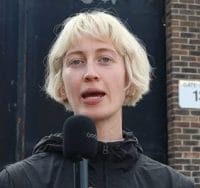
Frankie’s portfolio of work “demonstrates the rewards to be had when a journalist integrates with the local community”, judges said. “She looks at issues which might otherwise get overlooked – giving a voice to those without one.”
Nowhere is that more evident than in her work on homelessness in north London. She revealed that rough sleepers’ belongings and tents were being thrown into council bin lorries to clear the streets, a revelation which gained national attention and forced an investigation into how such a policy could have been agreed.
She then organised a public meeting for people to share their concerns with authorities and Camden Council agreed to no longer take part in the clearances. Judges said this work is a “great example of holding those in power to account”.
Meanwhile, in an article entitled ‘Never forgotten’, the family of Stephen Holmes – one of serial killer Dennis Nilsen’s victims – placed their trust in Frankie to finally tell their story. She reported on a memorial event with sensitivity and care, with the resulting piece being “particularly powerful”, according to judges.
Designer of the Year: Raymond Esteban, Mediahuis

A good design should not just be visually pleasing, but should clearly aid readers in engaging with content – something Raymond Esteban achieves to spectacular effect through the use of infographics and photo manipulation for the Belfast Telegraph’s weekly magazine and supplements.
It is his “impactful and attention-grabbing cover artwork” that Raymond has been recognised for in particular, with his “creative choice of imagery” praised for its impact by the judges.
Judges also highlighted well-executed Photoshop work and the strong typographic introductory quote used on the Belfast Telegraph Review supplement’s cover from May, which shows the transition from DeLorean's 1981 factory production line to Kat DeLorean's (hopeful) successor to her dad's iconic car.
“Raymond's designs are distinctive and well-crafted and, in a world where many layouts come from templates, his work is individual and has a great sense of personality,” they added.
Photographer of the Year: Kevin Scott, Belfast Telegraph

The Belfast Telegraph’s Kevin Scott has an instinct for being in the right place at the right time – and he combines this with an ability to capture both the intensity and humanity of any situation.
His “dedication to go beyond the expected to get the right shot” was evident when Scott attended Newry courthouse, where former DUP leader Jeffrey Donaldson was to appear on historical sex charges. Stepping away from the rest of the media pack, Kevin aimed to use a suction mount to photograph Donaldson through his car window, before it was mistakenly wound down and Scott was able to capture one of the most discussed images in Northern Ireland.
“To get such a clear photo on a day like this is remarkable and Kevin showed great initiative,” said judges.
He once again offered audiences a frontline perspective on critical issues when he was the only photographer to capture overnight rioting in south Belfast. The resulting front-page image is another example of Kevin going out of his way to capture historically significant moments, judges commented.
Opinion Writer of the Year: Catriona Stewart, Freelance

As a twice-weekly columnist for The Herald for the past 14 years, Catriona Stewart’s “unique and often quirky” look at current affairs frequently leans on her personal experience. Judges loved reading her “strong package of writing on tough subjects that is nuanced, respectful of the differing views of her readers, and touching because of her willingness to give of herself”.
Her column about alcohol addiction and the death of her father was particularly commended for being “considerate, honest, deeply personal and fascinating”.
“There were several lines in the article about alcoholism that made me pause for a few seconds and I suspect she's expressed truths that have taken the words out of readers' heads and mouths,” said one judge.
While her comment piece on assisted dying included interviews with affected families and professionals in Canada and New Zealand – where assisted dying is legalised – and an interview with broadcaster Prue Leith, it was her use of her own personal experience that judges, once again, appreciated the most.
Crime & Investigative Reporter of the Year: Charles Thomson, Newsquest South East

Charles Thomson’s “dogged reporting in the pursuit of justice is local journalism at its finest”, according to judges.
Responding to reports from residents, Thomson gathered evidence of drug dealing across Newham estates, following one particular death through the coroner’s court. His chronicling of the true extent of east London's rising death toll from novel synthetic opioids was followed up by the Sun, Mirror, Express and Daily Mail.
Charles’ “brave and agenda-setting reporting” also included undercover work. Acting on information leaked from prison, he posed as a criminal to infiltrate a gang that had arranged a £100,000 hit and in the process uncovered a smuggling operation flooding prisons. The story made national headlines and the Ministry of Justice has promised to investigate.
His series on abuse in Islington Council children’s homes helped complainants secure £10,000 each in compensation from the council’s support payment scheme. He also secured an exclusive interview with one of the former looked-after children, Olympian Kriss Akabusi, and the only interview with a woman suing the council for alleged abuse.
Feature Writer of the Year: Neil Mackay, The Herald

Neil Mackay’s entry was “head and shoulders above”, according to Regional Press Awards judges; “excellent, eye-catching topics and first rate writing”.
An investigative journalist for more than 30 years, Neil’s long-form features for The Herald are regularly among the most widely read and shared articles on the website, and bring in large numbers of subscribers for the publication.
His investigation into abuse at the prestigious Scottish private boarding school Loretto – which culminated in one former pupil stepping forward, dropping their anonymity, agreeing to pictures and telling their story on the record – was described as a “show-stopping exclusive" and a ‘MeToo’ moment for boarding schools.
“Neil obviously works off-diary to get great lines from people,” said judges, and his work “gives us hope for the future of our profession”.
Sports Journalist of the Year: Nathan Judah, Express and Star
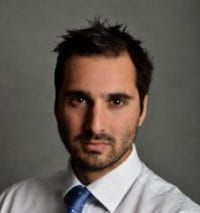
Nathan Judah has been a trailblazer in digital coverage for the Express and Star, leading the push for video content and directly driving subscriptions from sports fans since the introduction of a paywall in 2024.
He is well-known for his coverage of Wolverhampton Wanderers and co-hosts the weekly 'Wolves poddy' podcast, which regularly surpasses 15,000 listens a week. When accompanying Wolves on their pre-season tour, his daily tour diaries, videos, feature interviews, matchday coverage and podcasts helped more than double overall subscriptions for the paper.
With almost 48,000 followers on X, Nathan wrote a comment piece about the current toxicity of discourse both online and in-person and how it is affecting journalists. This was also accompanied with a heartfelt video. Judges praised his bravery, for “not being afraid to report on the issues of the day”.
Judges said Nathan was a “stand-out” winner for a “fantastic breadth of reporting… his work…should be held aloft as one of the finest examples in regional news.”
Specialist Journalist of the Year: Liam Thorp, Liverpool Echo

Liverpool Echo’s political editor Liam Thorp is a prominent voice in the region, and caught the eye of judges as “a journalist who understands his newspaper's readers and is at the top of his game”.
For much of 2024, Liam dedicated his time to exploring and documenting Liverpool's homelessness emergency. Months of reporting, speaking to those facing homelessness as well as those trying to help and investigating where the crisis originated, resulted in several front page splashes and spreads. Judges praised the “thorough and impactful long reads” and “colourful human detail”.
His extensive political coverage culminated in a special digital project ahead of the General Election entitled ‘Austerity City’, which documented the impact on Merseyside of 14 years of cuts. Months in the making, Liam together with Reach’s Data and Visualisation team produced a standalone website, bringing together data, human stories and visual storytelling.
Judges concluded that Liam demonstrated “journalism that really resonates with its audience and makes a difference in its communities”.
Cathryn Nicholl Award: Millie Bowles, KentOnline

Despite being just over two years into her journalism career – and with no former experience or qualifications in the industry – Millie Bowles undoubtedly has both a good nose for a story and a true reporter’s instinct.
This was especially evident when securing an interview with former Russian oligarch Ilya Yurov and his wife Nataliya, who Millie noticed were selling their mansion in Kent.
With her audience front of mind, she used the interview to ask questions that would resonate with local readers, and judges noted that this approach meant the subjects revealed personal insight they perhaps would not have disclosed elsewhere. The approach paid off, with the article gaining more than 30,000 page views on the Kent Online website and a dwell time of more than two minutes.
Judges also congratulated Millie for securing an interview with actor and star of the Netflix show Top Boy, Ashley Walters, which she said she managed to “snatch” with a “humble knock at the door”. Featuring Walters and his battle for planning permission to build an extension, it helped to turn an otherwise dry planning story into a worthy read, judges said.
Supplement of the Year: North Lakes Living, Barrnon Media
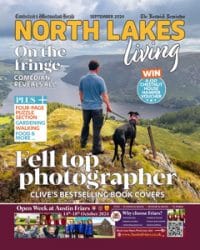
Launched in May 2024, the North Lakes Living supplement is distributed free of charge in the last edition of the month of two paid-for, weekly newspapers – the Cumberland & Westmorland Herald and Keswick Reminder – which have a combined circulation of around 8,000 weekly readers.
The 32-page supplement is described as being “packed with people-focused features, author profiles and book reviews, focus on local food and drink producers, charities, community projects and much more”. It also includes a regular guide to walks in the area and four pages of puzzles, as well as competitions with prizes provided by local retailers and restaurants.
With a strong focus on editorial, alongside sponsored content, the title relies on reporters getting out and about across an 800-square-mile patch and meeting some of those living and working locally. And it’s that focus on community that has resonated with readers.
Judges were “particularly impressed by the terrific mix of fascinating pieces covering a wide range of topics” and praised the “strong images and well thought out design…with wonderful covers”.
Campaign of the Year: Save our rail industry, Derbyshire Live|Derby Telegraph
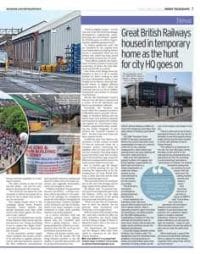
When it was announced that the 200-year old, Derby-based train manufacturer Alstom was to cease production in the city, the Derbyshire Live website and Derby Telegraph began working with other concerned organisations to save the company and the thousands of people it employs.
The resulting ‘Save our rail industry’ campaign was, according to judges, a welcome reminder of how local media brands can play a crucial role in bringing all elements of the community together.
Agenda editor Zena Hawley was commended for working with the then Derby City Council leader and Alstom management to ensure the messages reached even higher levels. Support was also garnered from then Prime Minister Rishi Sunak and Sir Keir Starmer, who both visited the Alstom site.
When the final day of production came, the Derby Telegraph kept the coverage rolling, urging readers to email MPs and sign a petition. The publicity prompted an emergency debate in Parliament involving ministers and local MPs and eventually, the government announced a new £370m contract to Alstom.
Scoop of the Year: Firm that bank rolled Vaughan Gething’s Campaign, WalesOnline
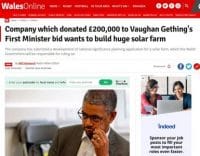
WalesOnline reporter Will Hayward’s investigation into a £200,000 donation to First Minister Vaughan Gething’s election campaign “was more than a story that was handed to the journalist – it involved perseverance and doggedness”, judges said.
That included navigating the obscure and opaque planning system in Wales, and sifting through every single donation that both Gething and his leadership rival Jeremy Miles had received. It eventually led directly to the resignation of the most powerful man in Wales.
Will didn’t stop with one exclusive as he went on to reveal questions behind the source of the donation from an environmental firm – run by a man who was prosecuted for illegally dumping waste on a conservation site – publishing a series of articles as the situation developed and keeping readers updated via the website and newsletters. Hayward also produced a video explainer of the situation to help reach as many people as possible.
Judges said it was hard to deny the impact of this scoop. “It is an important public interest story and a good example of in-depth political reporting,” they added.
Best Live Coverage: Liverpool Echo

The Liverpool Echo uses live coverage as an integral part of its storytelling – and three specific examples show how different tools and platforms come together to really engage with and serve readers.
Firstly, the Echo’s live court coverage of the trial following the murder of Ashley Dale drove 4.5 million page views across Reach’s Live Network, and an average engagement time of almost seven minutes. The sentencing of the four men convicted was broadcast live on the Echo's Facebook page and an interview with the senior investigating officer featured on YouTube.
During its "particularly impactful” coverage of the mass stabbing in Southport which claimed the lives of three girls, the Echo’s real-time live reporting sought to combat the disinformation widely shared on social media. Echo journalists were on the streets late into the night to cover the rioting, using a live blog to verify facts and amplify messages released by official sources.
And in what judges described as a “refreshing and positive approach”, the Echo also used its extensive live coverage experience to document the run-up to Taylor Swift’s concerts at Anfield, capturing the excitement and sharing fans’ stories, as well as giving valuable, local advice to those who travelled to the city.
Digital Initiative of the Year: Data Unit, BirminghamLive

BirminghamLive’s Child Poverty Emergency campaign centred around a wide-ranging report, created alongside Reach’s Data Unit, and ran to more than 12,000 words. The team quickly recognised that they needed to use a host of different technologies to communicate the important findings to audiences.
They used animated graphs, illustrations and photographs in a "scrollytelling" format, allowing the reader to become immersed in the information, while a custom chatbot was developed using Reach's in-house AI, Mantis, which allows users to ask questions about the report without needing to scroll through it in its entirety. T
A bespoke widget was also developed to generate letters to local MPs, connecting postcodes with MP contact details. By combining this with a letter template, at least 1,100 people immediately got in touch with their MP from both mobile and desktop platforms.
Judges said the campaign was a “comprehensive piece of work and a strong digital initiative." “The use of AI tools shows innovation, while the digital reporting is a great example of how to communicate complex issues in an engaging and thoughtful way.”
Best Commercial Partner: Chartbeat
For the past 15 years, content analytics platform Chartbeat has offered publishers invaluable insight into what their readers really want. With tools such as real-time and historical dashboards, experimentation and in-page optimisation, and robust reporting, clients have been able to understand, measure and build business value from the attention earned by their content.
Testimonials from the likes of Tribune, UOL, Raw Story Media, The Marshall Project and others outline how partnering with Chartbeat has given them a strategic advantage over other media brands, often resulting in substantial gains in website users and traffic.
It has allowed them to optimise their homepages, elevate their headline writing, extract live data to inform editorial strategies, and offered them a much deeper understanding of how audiences on a global, regional and local level are interacting with articles.
Judges said data is the life-blood of any modern-day publisher and Chartbeat is clearly a go-to commercial partner for many media brands as a tool for capturing, measuring and analysing critical data. It is an invaluable resource that helps firms to make decisions on its business and content strategies.
Reporting Communities Award: BirminghamLive/Birmingham Mail

“It's not often that publications concentrate their coverage on ethnic minority populations in a way that isn't patronising or clichéd,” but that is precisely what BirminghamLive has done with its Brummie Muslims brand, according to judges.
Against a difficult background for Asian communities, BirminghamLive implemented a series of editorial innovations – including using live blogging, social video and photo galleries – to help engage with, rather than talk at, the 341,000 Muslims in Birmingham.
Its coverage of Eid and Ramadan resulted in 2.2 million page views across the holy month, while a mini-series heading out to diverse areas of Birmingham attracted 50,000 page views. A newly launched WhatsApp community grew to 850 members in just three months.
“By using targeted techniques, social strategies and actively seeking positive work by the Muslim community, the Brummie Muslims brand was strongly identified and celebrated,” judges said. Overall, it was “a superb campaign, expertly and sensitively managed”.
News Website of the Year: Belfast Telegraph
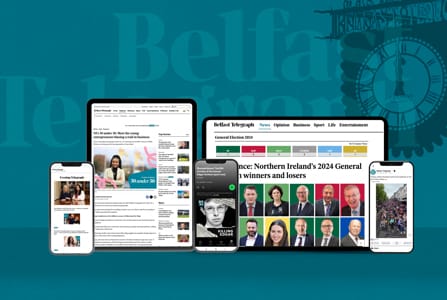
This is the third year running that the Belfast Telegraph has scooped the best website award, with judges this year recognising its “genuinely impressive coverage, range and invention”.
Reporting included coverage of the Katie Simpson murder case and the death of her killer Jonathan Creswell, live coverage of the General Election and the return to Stormont – which delivered almost 140,000 page views – and an immersive storytelling version of a two-part episode of the publication’s podcast The BelTel, which now averages 30,000 streams a week.
Judges commended the “co-ordinated strategy across channels and a focus on engagement, rather than traffic, to help put readers first”, and this approach translated into impressive metrics: a 12.5% rise in the number of subscribers, a 26% year-on-year increase in ‘subscriber attention minutes’ and a 13% year-on-year improvement in raw page views.
Judges praised Belfast Telegraph’s “clear navigation and great use of multi-media content”. The “classy” website “looks like it could belong to a national paper. There is clearly a strong digital strategy behind it, and content is positioned according to its value”.
Front Page of the Year: Last Breath, Western Mail
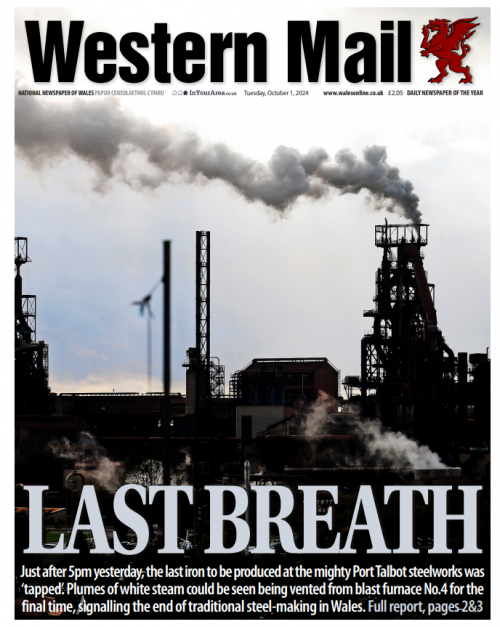
The front page of the Western Mail’s October 1 edition was described by judges as “memorable, combining creative use of the picture with a simple headline to stunning effect… It tells a compelling and important story in a striking way.”
Recognising the significance of the day the final blast furnace at Port Talbot steelworks would be shut down, the Western Mail dedicated an entire front page to a single image of the final furnace to be taken out of service. The chosen image of steam from the last venting lent itself perfectly to the resulting “powerful” headline, and a memorable and impactful front page was created.
The team were commended for purposefully negating to run any plugs on page, so as not to detract from the striking image, or indeed the historic moment in Welsh history. Along with the headline, judges also praised the combination of “well chosen words…and the excellent choice of picture [to] convey the gravity of the occasion”.
The high-impact treatment of such a significant event proved a success with Western Mail readers: the October 1 edition was, in circulation terms, up 5.1% week on week. “This is a brilliant example of front page design which stands out in a crowded field,” judges said.
News Brand of the Year (Small): Camden New Journal

North London-based Camden New Journal is a “great example of a weekly title doing what it does best: campaigning journalism; finding the unusual off-diary stories in their beats and bringing communities together”, according to Regional Press Awards judges.
From being the first to get the 2024 General Election results for its area – including the Prime Minister's patch – into print, to an investigation into the policy decision behind homeless people's tents and belongings being thrown away in council-ordered bin lorries, and the first ever interview with the family of one of serial killer Denis Nilsen’s victims, the news team “clearly matches consistent local reporting with creativity and great dexterity”, judges said.
Meanwhile, lighter stories about Primrose Hill residents getting fed up with Paddington film promotions in their area and an interview with the kebab shop owner who Taylor Swift ordered from, helped demonstrate CNJ’s “consistent journalistic impact across all areas of editorial coverage”.
Judges were particularly impressed with the team organising and hosting its own climate change conference and commented that “this is a newsroom tackling themes much larger ones shy away from”.
News Brand of the Year (Large): Liverpool Echo

The Liverpool Echo has had a stellar year, not least because of the “brilliantly handled, first rate coverage” of the Southport murders and subsequent violence across Britain, “but because the team has demonstrated time and again commitment to serving their communities and audiences”, judges said.
The real-time coverage of the mass stabbings in Southport sought to combat the misinformation shared on social media and provide a public service for a community in shock. Judges agreed this was achieved across both digital platforms and the print title, with “painstaking attention to accuracy and lack of sensationalism”.
Demonstrating its passion for agenda journalism, the Echo produced an immersive report into the impact of austerity on Liverpool, and published it ahead of the general election as a pitch to the next government to halt harmful cost-cutting policies. Judges said the piece “combines the best of data journalism and investigative reporting”.
When departing Liverpool boss Jurgen Klopp chose the Echo to share his love letter to Liverpool, judges said it “spoke volumes of the regard the publication is held in, at all levels”.



