
Newspaper overturns erroneous court order hours before deadline
Section 39 issued in spite of public tributes to tragic boy
An erroneous court order issued in relation to a child killed in a car crash led to a weekly newspaper rewriting its splash twice on deadline day.
The Section 39 order was issued by magistrates on Monday after 10-year-old Samuel Crocker died following the hit and run incident in the town of Crediton on Saturday.
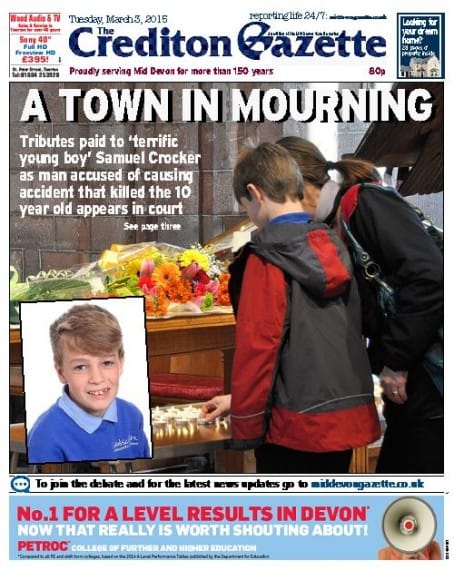
It meant the Mid Devon Gazette had to rewrite its splash to remove any mention of Samuel or his school, anonymise the quotes from his headteacher and remove the picture of him which had been supplied by his relatives.
However the paper successfully overturned the ruling two hours before it went it to press, enabling it to publish a poster front page in memory of Samuel in Tuesday's edition.
The order was initially made on Monday morning when Exeter Magistrates Court heard the case of Cameron Trivett, who is accused of causing Samuel’s death by careless or inconsiderate driving and failing to stop at the scene of an accident.
It was issued despite public tributes appearing on the websites of Samuel's school and of Devon & Cornwall Police, as well as a number of stories which had named him on the Gazette's website prior to the hearing.
The Bishop of Crediton had also spoken publicly about the tragedy at a memorial service attended by hundreds of people.
After taking advice from Tony Jaffa, of Foot Anstey solicitors, on the issue, editor Patrick Phelvin decided to abide by the order until the court was reconvened to hear an appeal.
Said Patrick: "We were faced with the absurd situation where we had to rewrite the story to remove any mention of Samuel or his school, anonymise the quotes from his head and remove the portrait picture of him which had been supplied by his relatives.
"Fortunately the clerks were able to get all parties back into Exeter Magistrates Court and, after some argument, the order was revoked.
"This just goes to show that there are perhaps well meaning but poorly informed court clerks and magistrates out there and reporters need to be ready to criticise and perhaps challenge their decisions."



