
Police to be trained in journalists' rights with new video
College of Policing incorporates five-minute film into command courses
A new video explaining reporters' and photographers' rights during demonstrations and riots is set to be incorporated into police training courses.
The video, commissioned by the National Union of Journalists, will feature in all licensed command courses at the College of Policing and be added to the police service knowledge data base to inform good practice.
The five-minute film explains that despite the often-challenging situations officers find themselves during episodes of civil disorder, the police should help the press so they can gather accurate information.
It also answers questions on whether photographers need permits to take pictures in a public place, and whether officers are allowed to seize journalists' film.
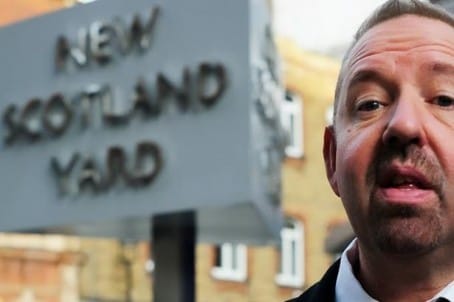
The video is presented by Alfie Moore, pictured above, an experienced police officer who turned to stand-up comedy during a career break.
It is directed by Rob Whitehouse.
John Toner, NUJ freelance organiser, said: "We are delighted by the enthusiasm of the police for the film. Over the years we have addressed officers on public order training courses on a number of occasions, but that would amount to around 200 officers on each occasion.
"The film will be viewed by thousands of officers each year, and we hope it will make a difference to their understanding of the rights of photographers and film-makers.
"Rob Whitehouse had excellent co-operation from police forces in the making of the film, and that co-operation continues in the speed with which the various forces and the National Public Order and Public Safety Committee are deploying the film."
Commander BJ Harrington, head of the Metropolitan Police's public order unit, thanked the NUJ for producing the video.
He said: "Working alongside each other on the streets, in fast changing and developing situations on public order events, is sometimes challenging, the police have a job to do, and so do the photographers and journalists.
"By taking part in a police training video, the NUJ have given the police an insight into their work. The video will be incorporated into learning packages for officers wishing to be public order trained."



