Nurture local radio, ex-BBC man urges corporation
Local stations now 'sounding too alike'
A former BBC local radio boss has urged the corporation's new director-general to nurture the sector rather than resort to fresh cutbacks.
Three years ago the corporation axed 139 local radio jobs and introduced increased 'programme sharing' across its network.
It is estimated that scrapping local radio altogether could save the corporation £60m a year at a time when it needs to shave around 10pc from its operating costs.
But former local radio station editor Liam McCarthy is advising new D-G Matt Brittin to resist the "low hanging fruit" and invest in its local offerings.
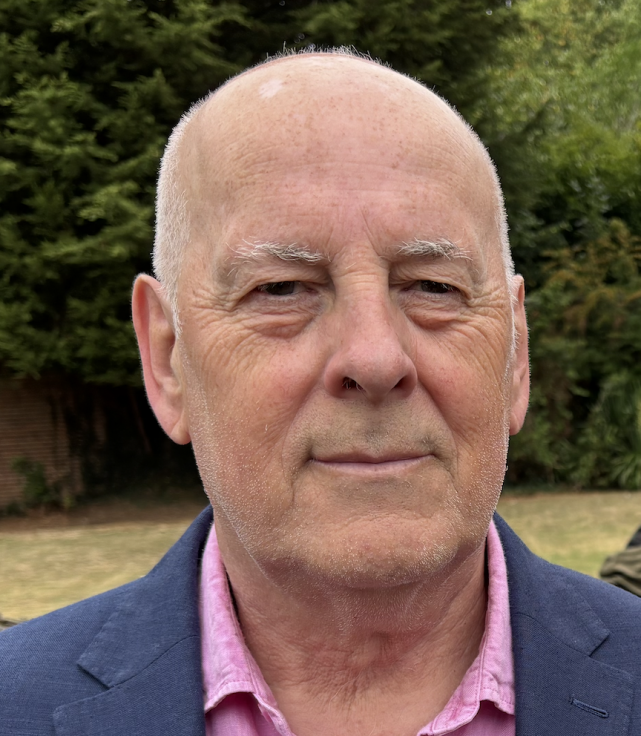
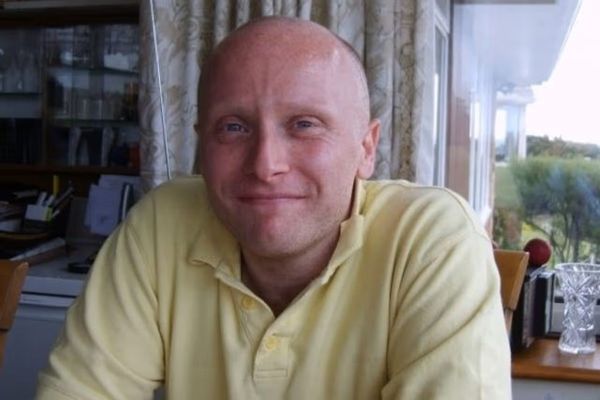
Liam, pictured, makes the case for the sector as part of a series of open letters to Mr Brittin.
They have been compiled in a new book entitled Letters to Matt Brittin, edited by John Mair and Andrew Beck, some of which we are publishing on HTFP.
Wrote Liam: "In local radio the introduction of ‘regional’ rather than local output on weekday afternoons and weekend mornings has shredded audiences. The BBC local radio audience has now fallen by almost one third, down some two million listeners (6.76m to 4.6m a fall of 31 per cent) in four years.
"The move to digital for BBC Local in England is absolutely right; it is increasingly where licence fee payers are. However, we know that at a practical level BBC local radio stations have a brand loyalty that is still attractive.
"How can that connection be further stimulated into listening? The stations need to actively take advantage of the space in local markets that has opened up and concentrate on their authentic sense of place.
"They can’t do that when they are micro-managed from the centre with programme formats that hark back to 1980s commercial radio, thus leaving stations in Newcastle, London, and Cornwall all sounding alike."
Here is his letter in full.
Dear Matt
Congratulations on your appointment to the most prestigious and challenging post in British broadcasting. You arrive to take over both the outcome of the Charter negotiations with the government and the predicted need to save a further 10 per cent of the BBC’s operating costs to make ends meet. That is some challenge.
I am sure that by now there will be a metaphorical if not an actual queue of department heads from across the corporation at your door to plead their own special case. Many will offer you the seemingly tempting low-hanging fruit of scrapping BBC local radio to save money—some £60m. This is recurring siren call from the ‘BBC Blob’ that began when the BBC local radio budget was carved out of the licence fee in 1969. And since then its funding has been continually pruned by the ‘Blob’ with the enthusiasm of an amateur gardener. In the 1990s John Birt carried out research—hidden somewhere in the bowels of the BBC—that found BBC local radio England was cherished by licence fee payers, so he didn’t cut it as much as he was going to! Two of your predecessors, Greg Dyke and Tony Hall, truly embraced BBC local in England, realised its importance, and funded it properly. I urge you follow their example.
BBC Local in England (TV, radio, and online) reaches almost half of licence fee payers every week, a figure that not many in the BBC will know, so tread carefully. In an age of streaming and personalised news BBC Local has the potential to be a reinvigorated foundational service of the BBC for the next charter period. This is especially so as the financial consequence of the digital revolution has been the decimation of traditional local newspapers—some now going behind a paywall to survive—and the loss of local commercial radio stations as they are combined into national brands such as Capital and Greatest Hits Radio. Indeed, Ofcom has just had to mandate these stations must locally produce news as it worries about the loss of local radio news on what have become de facto national stations. In England the BBC is therefore providing vital local services in local democratic and journalistic deserts, with people increasingly turning to social media streams —devoid of fact-checking and impartiality—to get their local news.
As Director-General you can make sure that the BBC plays a major role at a local level for licence fee payers. It is, after all, digitally led market forces and not the BBC that has created the collapse in advertising income and the retrenchment of commercially sustainable local news provision. Yet the BBC has been far too timid in attempting to fill the void that has been left behind. Nervous of offending newspaper groups it pulled out of introducing local television in 2008. It was then late and reticent to build up its online offering and has compounded this with a botched repositioning of its local radio stations. Better late than never the newly expanded local news sites in England have seen traffic up by around 40 per cent as licence fee payers clearly value substantial localness. Your portfolio of regional news programmes remains the most watched news service across England, but as viewing to BBC One declines over time these programmes need to be reinvented for digital consumption in a variety of online formats.
However, in local radio the introduction of ‘regional’ rather than local output on weekday afternoons and weekend mornings has shredded audiences. The BBC local radio audience has now fallen by almost one third, down some two million listeners (6.76m to 4.6m a fall of 31 per cent) in four years. New research by Opinium among BBC local radio listeners aged over 45 shows that nearly half (47 per cent) feel the stations are not as local or distinctive as they once were, which is bad news for the BBC. At a time when the listening to all radio in the UK has only dipped slightly, and people increasingly use their phones and smart speakers to listen, this suggests something is not right with the BBC local radio offering. Currently half of BBC local stations in England have fewer than one hundred thousand listeners per week, including two with under fifty thousand. As harsh as it sounds without change there must come a point where the audience to a station falls to a level that means its future comes into question: spending £1.5m on a radio station with few listeners is not the best use of public money—this would be a failure by the BBC.
One of the core objectives of the BBC is to represent the diversity of the United Kingdom in its news coverage, something that it is even more important at a local level. Therefore it is simply unacceptable that there should still be what sound like exclusively white, middle-class radio stations in some of England’s most culturally diverse cities. There are some honourable exceptions but this is an issue that needs to be addressed with action—not more words or task groups. This is a problem about employment practices and programming as much as class and ethnicity. Perhaps it is little wonder that people of colour don’t think the BBC is for them.
The move to digital for BBC Local in England is absolutely right; it is increasingly where licence fee payers are. However, we know that at a practical level BBC local radio stations have a brand loyalty that is still attractive. The response to the greater amount of inventive content now being posted on the social media feeds of BBC local radio is paying off with almost ten million people following their local stations on Facebook and five million on X. How can that connection be further stimulated into listening? The stations need to actively take advantage of the space in local markets that has opened up and concentrate on their authentic sense of place. They can’t do that when they are micro-managed from the centre with programme formats that hark back to 1980s commercial radio, thus leaving stations in Newcastle, London, and Cornwall all sounding alike. There are strong managers in large connected regional areas that should be left to manage their radio stations to the agreed Service Licence, while keeping to existing brand identity and budgets. I’m not talking about journalistic anarchy. I would foresee only four or five regions in England all of which would have larger populations than Wales, Scotland, or Northern Ireland. This will bring innovation and new ways of working that will flourish with best practices spreading across England.
The changes made in BBC Local in England in the last three to four years have focused as much on systems and management as journalism, leaving local staff unsure of who is responsible for commissioning and managing output. A management totem of creating Investigation Teams in each region is symptomatic of this. It should be questioned whether the output these teams produce is meeting the aims of journalistic impact and volume. Are they value for money? In an ironic turn of events BBC Local in England in 2026 has ended up employing more newsroom journalists than in 2023 but producing less news output at a local level, leaving BBC local radio behind.
Perhaps one answer lies in the role of the licence fee funded Local Democracy Reporting Service (LDRS) and its 165 reporters based in newspaper and broadcast newsrooms across the UK. Tim Davie wanted to expand the remit of the Local Democracy Reporting Service to cover health authorities, and police and crime commissioners, and to provide scrutiny of elected mayors, I agree—but the BBC itself should make more use of this material in its local programming. It points the way to perhaps refocusing the work of Community Producers in BBC local radio to work across their local community radio stations to both bring in new talent and programmes to the BBC while offering BBC material to community stations. The major focus has to be online, getting stories from BBC local radio and regional television out to the personal feeds of licence fee payers.
I wish you well in your new role. You should make time to regularly get on the road to visit all of your offices across England, meet the wonderfully dedicated staff, and be inspired by their desire to always do more for their local communities. Nobody said this job would be easy; many people said it would be impossible; but I wish you the very best as you take on the BBC—probably literally.
Best
Dr Liam McCarthy
University of Leicester
- Dr Liam McCarthy is Honorary Fellow in the Department of History, Politics and International Relations at the University of Leicester. He worked for the BBC between 1978 and 2008, was Managing Editor of three BBC local radio stations, and Head of BBC Local Radio Training. His published books are Finding a New British Asian Sound on BBC Radio (2023) and The Daily Life of African American GIs in Britain during WW2: A War Within a War (2026).
This chapter appears in Letters to Matt Brittin, edited by John Mair and Andrew Beck, published by Bite-sized Books, available on Amazon.