
Newspaper stalwart who switched from print room to subs desk dies aged 77
Switch in career direction followed introduction of new technology
A former print room stalwart who switched to journalism after the demise of hot metal has died aged 77.
Arthur Aston-Jones was one of two printers at the Derby Telegraph who retrained as journalists after the move to photo-typesetting in the late 1980s.
Arthur went on to become one of the mainstays of the Telegraph subs desk, spending several years as production editor and often acting as chief sub.
Having begun his association with the title as a 13-year-old paperboy before being taken on as an apprentice compositor, he finally retired aged 59 after 44 years on the staff.
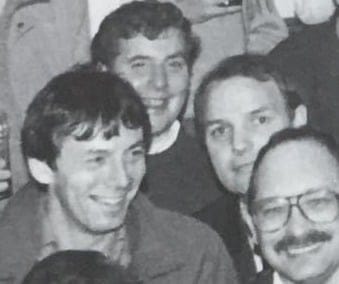
Arthur died last month and his funeral was held at Derby's Markeaton Crematorium on Monday.
Among those leading the tributes was former Telegraph night editor Gordon Wilson who has also shared his memories of Arthur with HoldtheFrontPage.
Wrote Gordon: "His was not a high-profile career. He wasn’t an editor or a senior news or sports reporter whose name might be known to the public – but I can confidently assert that anybody who worked alongside him will remember him with affection and genuine respect and, now, with sadness.
"For Arthur was a one-newspaper man but most certainly not a one-job man. His 44-year career at Northcliffe House encompassed huge change within the industry and he found himself at the very heart of that change.
"The switch in career direction came about in the late-1980s. It followed the volatile years of the advent of new technology, the resistance to it of the powerful print unions - Arthur was FoC of the National Graphical Union for a number of years - and the eventual big bang when it finally happened.
"Most of the Derby print union members lost their jobs, but a dozen or so were transferred to retrain in other departments and Arthur and colleague Bill Pritchard moved into the newsroom. That was a huge challenge to men who had only done the one job all their working lives and now had to learn completely different skills.
"Journalists, remember the nerves you felt when you started out in your first editorial job? Imagine how it must have felt for these chaps, who knew that there would be those among their new colleagues who doubted their ability to prove their worth, not having had that NCTJ training and exposure to fearsome old editors and battle-weary hacks for on-the-job experience.
"Yet prove themselves they did, particularly in the sub-editors’ department. Why? One, because they were grafters, giving the lie to the old impression that the print guys were only interested in clocking on and off at the appointed and agreed hour; two, because they knew the business, they were newspapermen; and three, because they knew the patch as well as anyone and better than most.
"Bill eventually moved on to the Burton Daily Mail – no enforced job switch, this, they wanted him – and Arthur spent some years on production editor duties. No glory headlines here, the challenge was to make sure that the paper got out on time, up to seven editions a day with deadlines in intimidating quick succession in late morning.
"That required great understanding of the new equipment with which some journalists had an uneasy working relationship and understanding. They couldn’t understand why a page would not output and some of them showed little sympathy with the need for deadlines when they did not suit their own working pace.
"It required no little management skill to chivvy them along without being threatened with an unwanted bodily intrusion with a coffee-stained mouse.
"And this was where Arthur really shone through, because not only was he more than capable with words and technology, he was also the nicest and most polite man with whom you could ever hope to work.
"Nobody, but nobody, had a bad word for Arthur Aston-Jones. Former editor Steve Hall summed him up last week: "Things were always better when Arch was on shift - better because of his professionalism, better because of his integrity, better because of his passion.
""We missed him when he retired. We'll miss him even more now." And so say all of us."



