
New initiative aims to link family cases with court reporters
Journalism bureau's map goes live
A new initiative aims to boost reporting of family courts by linking people who want their cases covered to nearby court reporters.
The Bureau of Investigative Journalism is looking for journalists in England and Wales who are keen to cover family court cases.
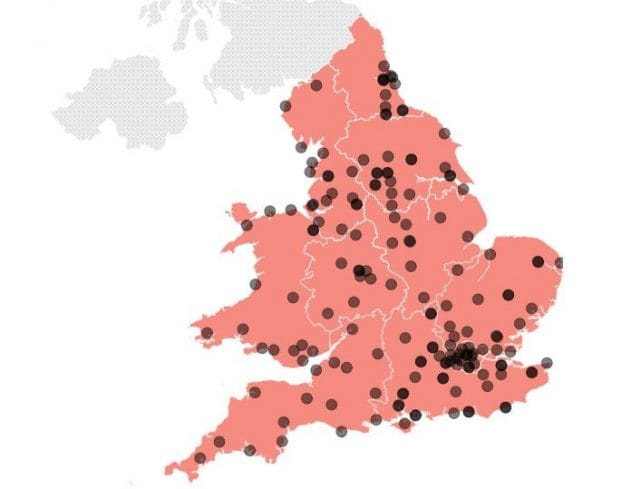
Those who sign up will be included on an interactive map that can be accessed by people going through court proceedings to find a local reporter near to where their case is being heard.
The initiative, called Courting Coverage, aims to link people who want their cases to be covered by the media with journalists who want to do family court reporting.
According to the Bureau, while real progress has been made towards making family courts more transparent, only a tiny fraction of cases are actually reported on.
It says that one of the major obstacles to greater coverage is that reporters don’t know which cases to cover, and the people involved in proceedings don’t know how to effectively tip-off journalists.
Gareth Davies, TBIJ project lead, said: "Family courts across England and Wales make life-changing decisions every day, but the vast majority are made in the absence of journalistic scrutiny.
"While the transparency pilot has given reporters greater access to documents and to report what happens in court, at the moment there's a lack of awareness within the media about ongoing cases and what they involve.
"Unlike other parts of the justice system, reporters aren't able to check court listings to determine what a case involves and whether it's worth their time. Additionally, it's not feasible for a reporter to spend the day in a family court on the chance of finding a newsworthy case.
"Hopefully, by connecting people, we can start to break down some of these barriers and that will result in greater media coverage of a hugely important part of our justice system.”
Julie Doughty of the Transparency Project, a charity set up to increase public understanding of family courts, described the initiative as a "groundbreaking step forward in increasing public understanding of family justice."
She said: "We believe that open reporting is essential to help address perceptions that family courts are closed and secretive. Although a reporter attending makes no difference to the outcome of a case, we have been told by some parents that they felt the hearing was fairer because we were there."
Barrister Lucy Reed KC added: "I think this resource could make a big difference. There are many parents, both with and without lawyer support, who tell us they would feel safer if an independent observer was at court and actively welcome the attendance of the journalists or legal bloggers.
"At the moment most of them are unable to obtain that reassurance.”
Courting Coverage is open to all accredited journalists in England and Wales, staff and freelance, and will officially launch later this year once the first tranche of reporters are on board.
Anyone who would like to be involved should email familycourtfiles@tbij.com.



