
Nandy announces new £12m fund for local news
Funding will partly be used to address 'news deserts'
The government has unveiled a new £12m funding stream to support local news provision, with help focused on so-called 'news deserts.'
Ministers have today published their long-awaited Local Media Strategy which, as well as providing some financial support for the sector, will aim to promote newspapers in schools and encourage young people into journalism.
The £12m local news fund will also be used to help local news publishers innovate digitally and to support community radio stations, while hyperlocal titles are also being promised a share of government advertising spend.
The strategy was unveiled by Culture Secretary Lisa Nandy ahead of her keynote speech to the Society of Editors' conference near London's Tower Bridge this afternoon.
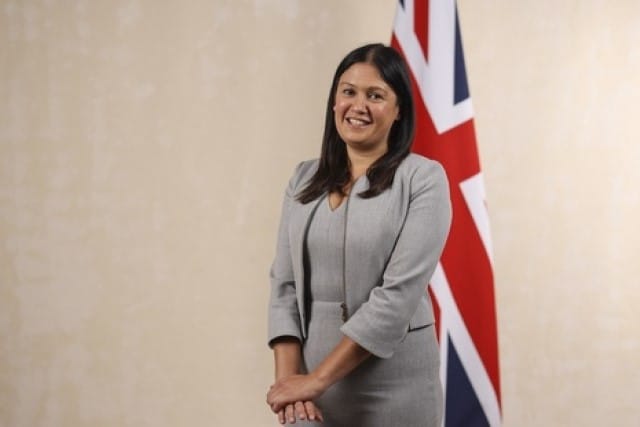
Ms Nandy, pictured, said: "This strategy will provide unprecedented funding for local media outlets to invest in innovation and infrastructure, almost tripling the size of funding for community radio, harnessing the power of local and national government and giving more young people access to high quality journalism and the opportunity to pursue careers in it.
"Because local media was and always has been a ladder of opportunity to help new voices break into journalism. This is not a nice to have. It is essential to a cohesive country.
"Our debate is too narrow and too small. We will change that. The strategy we publish today is the start – not the end point – and we recognise there is more to do.
"But it is the start of a new approach to local media, which nurtures it and places it directly at the heart of our government’s support for our country. Because the future of news is local.”
The local news fund will enable local media outlets to bid for grants to support their financial sustainability and transition to digital businesses, with the aim of stemming the closure of titles and journalist redundancies.
A portion of the fund will be used to revive local news provision in areas where there is no print, online, TV or radio outlet specifically dedicated to that area - the so-called 'news deserts.'
According to the department for culture, media and sport, 37 local authority districts now fall into this category, leaving as many as 4.4m without local media outlets.
The initiative could see existing local news publishers or neighbouring news titles expand into the area or revive a dormant title, or the establishment of brand new, independent, community-owned titles.
Other new measures to be announced today include the launch of a new campaign called Inspiring the Future which will aim to connect local media employers and journalists with schools to encourage young people into media careers, initially based in the North West.
And the government is promising improvements to its'Newspapers for Schools' news library, an existing platform funded by the Department of Education offering digital access to 150 local and national news titles.
A Regional Media Forum is to be launched in the West of England to act as a channel for dialogue between local media outlets and councils, with the aim of establishing a best practice framework which could be rolled out to other areas.
And the strategy also includes a commitment to make best use of local media in government advertising campaigns, including "piloting and assessing" the value of hyperlocal news titles.
However the industry still faces a battle to persuade ministers to retain the requirement that public notices should be published in print publications.
The DCMS says it will undertake a review of statutory notices, posing the question whether print titles are still the most effective means of keeping the public informed.
It said: "These notices are intended to keep communities informed of decisions made by their council or other institutions which may affect their quality of life, local services, or their property. However concerns have been raised in recent years over whether print newspapers are still an effective means of raising public awareness of this information.
"Recognising calls for greater digitalisation of statutory notice requirements, a public consultation will be launched to understand how statutory notices can best work for communities and effective journalistic scrutiny."
News Media Association chief executive Owen Meredith said: "The government’s focus on the sustainability of local journalism and its importance to communities through the package of measures announced in the Local Media Strategy today are very welcome.
"As reader habits change and the way we all access local news evolves with technology, ensuring publishers are properly rewarded for their investment in local journalism is vital, rather than the lion’s share of the value being siphoned off by Big Tech.
"We are particularly pleased to see a clear commitment to make better use of trusted local news environments – which reach 77pc of UK adults - for central government advertising, as well as a new £12 million fund to boost local news provision. We are also delighted to be supporting a new campaign aimed at inspiring young people to take up a career in local news media.
"The Strategy also rightly identifies a need to improve transparency in local public bodies - maintaining a strong link between public notices and local news media will be critical to the success of that important work.”
Society of Editors chief executive Dawn Alford added: "The Society welcomes the government’s recognition of the importance of local media and the steps set out in this strategy to support innovation and encourage the next generation of journalists.
"A strong local media sector is essential to democratic society, and we look forward to working with government and industry partners to ensure it continues to thrive and serve communities across the UK."
The revelation that ministers were looking at a new funding stream for local media was first referenced in a recent policy paper by another government department covering social cohesion.
The paper, entitled Protecting What Matters: Towards a more confident, cohesive, and resilient United Kingdom, was published by the Ministry of Housing, Communities and Local Government on 9th March.
It said: “We will set out our support for local media as essential for giving voice to communities that can otherwise struggle to be heard, holding local institutions to account and countering false narratives.
“We will shortly publish the Local Media Strategy to guarantee the long-term sustainability of local journalism. As part of this we will provide new funding for local media publishers to adapt to commercial and technological changes and revive a local news presence in areas where it has retreated. We will also further boost community radio so that it can support community radio in more places annually.”
Elsewhere in the same policy paper it states: "Investment in local communities and communal life is central to rebuilding pride and belonging. The government will expand the Pride in Place programme, putting more communities at the heart of decision-making in their neighbourhoods, and providing them with the funding to deliver change.
"This comes alongside further support for local media, reviving our high streets, and tackling crime and environmental harm."
The Public Interest News Foundation (PINF), a charity that aims to regenerate local news, welcomed today's strategy as ‘an important first step, but called for more detail.
Executive director Jonathan Heawood said: ‘Local news is part of the fabric of our society, but it’s under huge pressure. We’re very glad that the Government is planning to create a local news fund, as the PINF Local News Commission recommended last year, but we urgently need to see more detail about how the fund will operate.
"The fund must support the regeneration of local news by helping community-centred local news providers who are fighting to build sustainable business models and develop audiences for high-quality local journalism amid an existential threat from big tech.
"We also believe that the fund should be administered independently of politicians. If the local news fund is designed and delivered in the right way, then this could be an important first step towards a new era for local news and local communities in the UK."



