
Journalists overturn secrecy order on man who kicked puppy to death
'Most farcical thing I have ever seen in a court' says reporter
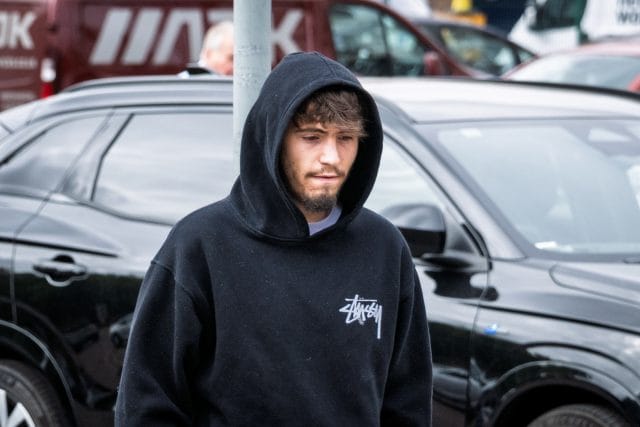
Journalists have overturned a "farcical" anonymity order on a 21-year-old man who kicked his emotional support puppy to death.
Kieren Holford, of Roman Way, Chippenham, appeared before Wiltshire magistrates on 11th July and pleaded guilty to a charge of causing unnecessary suffering to a protected animal.
However when he appeared at the same court for sentencing on 21st August, an order was made prohibiting publication of his name and address.
The move was condemned as "legally illiterate" by media law journalist Charlie Moloney who, together with court reporter Daniel Jae Webb of Wiltshire 999s, has now succeeded in having the order lifted.
Following the imposition of the order, the duo submitted a pre-action letter threatening judicial review of the decision.
However Holford's defence solicitor initially sought to double down on the decision, acccusing Daniel of wanting to publish "clickbait."
Solicitor Luke Jameson argued that because Holford was a vulnerable individual, his "protected characteristics" should override existing case law upholding press freedom.
"Mr Webb's right to name and shame serves no public interest in this case other to provide Mr Webb with click bait material putting Mr Holford at significant risk of harm," he wrote.
The order was eventually lifted at a subsequent hearing on Friday after magistrates accepted it had been erroneously imposed.
Holford was sentenced to an 18-month community order, with the requirement to complete 140 hours of unpaid work and 15 rehabilitation activity days with the probation service.
RSPCA prosecutor Matthew Knight said the puppy – a four-month-old sprocker spaniel called Daisy – had been kicked with such force that it caused “catastrophic injuries” which resulted in death.
Mr Jameson, defending, accepted that his client had kicked out at Daisy, describing him as a “vulnerable person” who had intended for the puppy to be his emotional support dog.
Said Charlie: "This is, without a doubt, the most farcical thing I have ever seen happen in a criminal court. The magistrates completely parted company with legal reality, something which should not be possible when they have a legal adviser and the lawyers representing the parties there to assist them.
"Worse still, when the defence lawyer who applied for this preposterous restriction discovered that the magistrates court was planning to overturn it - after we sent a pre-action letter threatening judicial review - he actually doubled down and opposed the move.
"But he didn't cite any authorities, as you might expect a lawyer to do, instead just going on a stream of waffle including some irrelevant accusations about 'clickbait'. It was more like reading an email from a litigant in person than a professional solicitor.
"This entire incident is very concerning. But on a positive note, this was a great opportunity for us to collaborate as court reporters and demonstrate that, when we have boots on the ground in court, journalists are still capable of defending open justice in keeping with our historic role."
Added Daniel: "This case highlights how quickly transparency in the justice system can be compromised if court orders aren't properly scrutinised by journalists.
"It was deeply frustrating to see a reporting restriction granted without any legal basis, blocking coverage of this very serious animal cruelty case.
"Holford killed a four-month-old puppy. He pleaded guilty to the offence, and it was reported by Wiltshire 999s back in July. It was highly unlawful for the court to impose a reporting restriction at the sentencing hearing.
"Working with media law expert Charlie Moloney to challenge and overturn the order was a reminder of how vital it is for journalists to be present in courtrooms.
"Without that, this injustice could have gone unchallenged - and the public would never have known exactly what happened to Daisy, or what justice was served.
“It’s a win for open justice, but also a wake-up call. We as journalists must stay alert, because if we’re not there to fight for press freedom, no one else will.”



