
Police blame journalists' 'donkeys and sex' queries as they consider FoI charge
Top cop believes "nominal fee" for requests may be viable
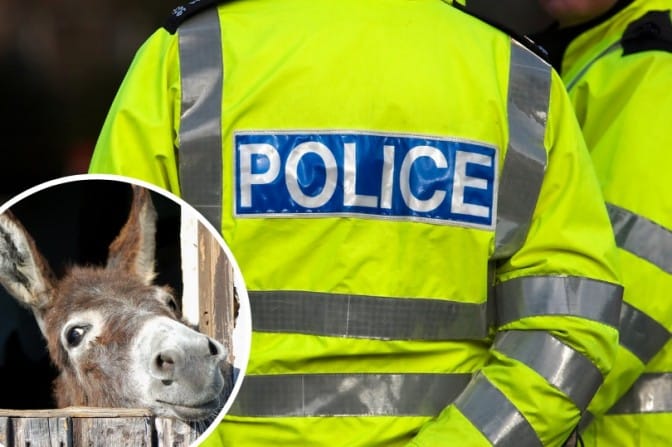
Journalists searching for crimes involving "donkeys" and "sex" have been blamed for a police force's decision to consider charging for Freedom of Information requests.
Leicestershire Police has raised the issue of whether it should charge for the information, saying the legislation is being used for "negative judgements" about the force.
The proposal was revealed in a report to members of the Police and Crime Commissioner for Leicestershire’s ethics, integrity and complaints committee, according to a story in the Leicester Mercury's sister website Leicestershire Live.
Although the force said the requests were coming mainly from "certain national newspapers," the charges would apply equally to journalists in the local media.
A senior source at the force told Leicestershire Live that there are currently seven members of staff dealing specifically with the requests.
The source, who did not wish to be identified, added: "We get endless Freedom of Information requests from certain national newspapers asking for things like a list of any crimes we have had reported involving the words ‘donkey’ and ‘sex’.
"They are nothing more than fishing trips by journalists hoping they might provide an amusing story but they do take up a lot of our resources. For a journalist it’s a request that takes minutes. For us to handle it takes a lot of time – and at the end of it they might not even write a story.
"FoI can be very useful to hold public bodies to account but that’s not what many of the requests we get are about."
At a meeting of the committee, Paul Hindson, chief executive of the Office of the Leicestershire Police and Crime Commissioner, said he had worked in a number of different settings and described FoI requests as "incredibly burdensome".
Deputy chief constable Rob Nixon added: "I do think a nominal fee for professionals who are contacting us would stop some of the requests that are put in just because you can."
The report detailed that requests dealt with by the force had equated to 80,000 operational staff hours and 3,333 days, with journalists and academics being responsible for 75pc of requests, and only a small proportion from the public.
It states: "We have to provide this information by law but should the police be charging for this information? Is it used just for negative judgements of the police as positive news stories and statistics are not readily requested.”
Commenting on the report, Mercury editor George Oliver told HTFP: "Our local force makes a reasonable observation about the nature of some of the requests that it is receiving, as well as scale of work involved.
"However, a quick look on WhatDoTheyKnow shows that the force is also receiving FoI requests from members of the public and representative bodies looking for information about clear areas of public interest. The suggestion appears to be that these requests should have free access but that identical requests from journalists should not.
"We at the Leicester Mercury - and I suspect more of our colleagues from around the country - are often told by press offices in various public authorities that we will have to submit an FoI to obtain what used to be considered fairly basic statistical information.
"For example, Leicester's local democracy reporter recently rang up a press office to request the latest figures of a dataset. Identical previous data had been published in a report by the authority and we wished to compare year-on-year. It was a reasonable assumption, therefore, that the information was both available and publishable. She was told to put an FoI in.
"FoI may be "incredibly burdensome" for Leicestershire Police but the force has also stated that it wishes to be transparent. This does raise a question of how it makes the distinction in the case of "professional" journalists who are also rate-payers residing in the county? Also, is the suggestion that all media "professionals" be included - whether working for national media groups or small parish magazines? And what constitutes a "nominal" fee?
"I would obviously welcome the opportunity to go along to force HQ to speak further about the issue."



