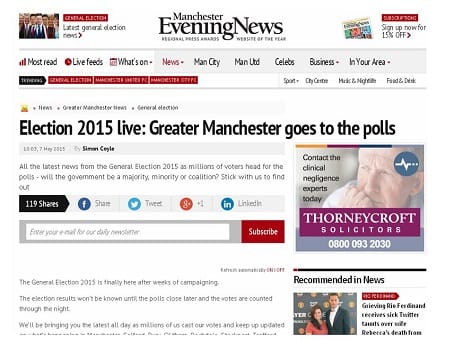
Front pages tell story of dramatic election night
Round-up of how regional press covered nation's night of destiny
Scores of regional journalists were taking a well-earned breather this morning after working through the night to tell the story of a dramatic election outcome both in print and online.
Initial expectations of an inconclusive result were confounded by the 10pm BBC exit poll showing the Tories on course to become comfortably the largest party.
With early results appearing to confirm the forecasts, it meant a number of regional dailies were able to accurately predict the outcome as their first editions went to press.
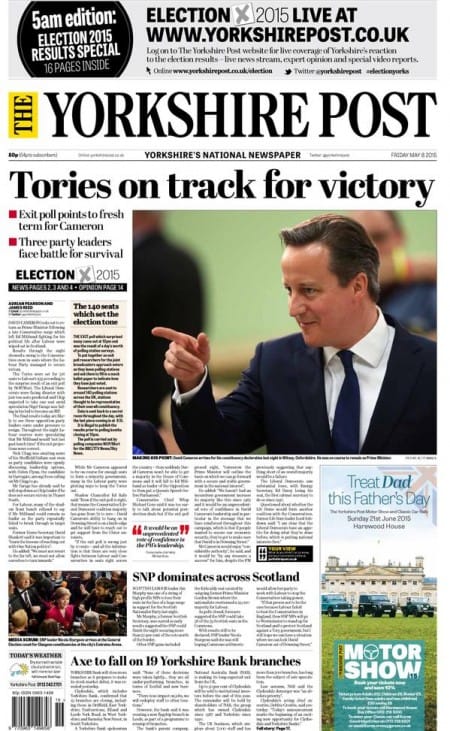
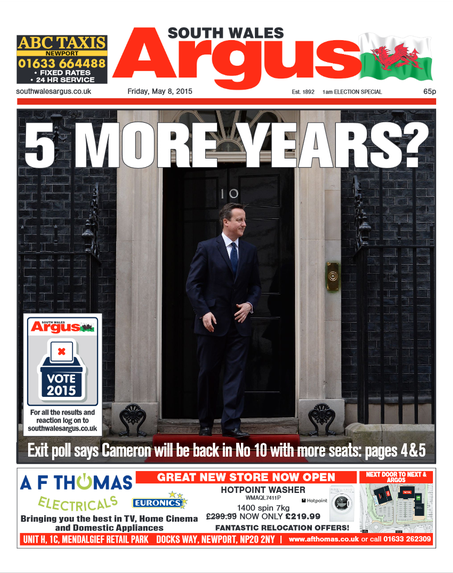
Among those first out of the blocks were the Yorkshire Post and the South Wales Argus which both reported that the Conservatives were on course for victory.
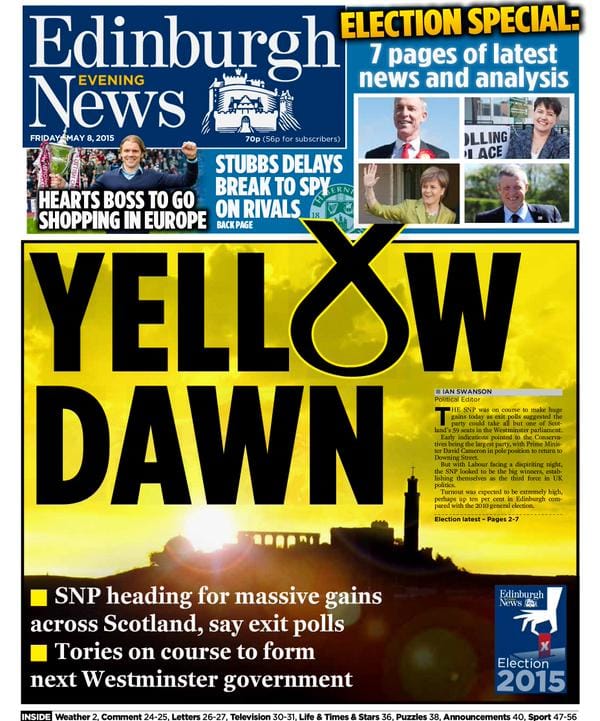
However a different story was unfolding north of the border, with the dramatic surge in support for the Scottish National Party sweeping all before it.
The Edinburgh Evening News used a dramatic image of the sun breaking over the Scottish Parliament at Holyrood to illustrate its splash, while the Aberdeen Evening Express picked up on a comment by former SNP leader Alex Salmond for its front page.
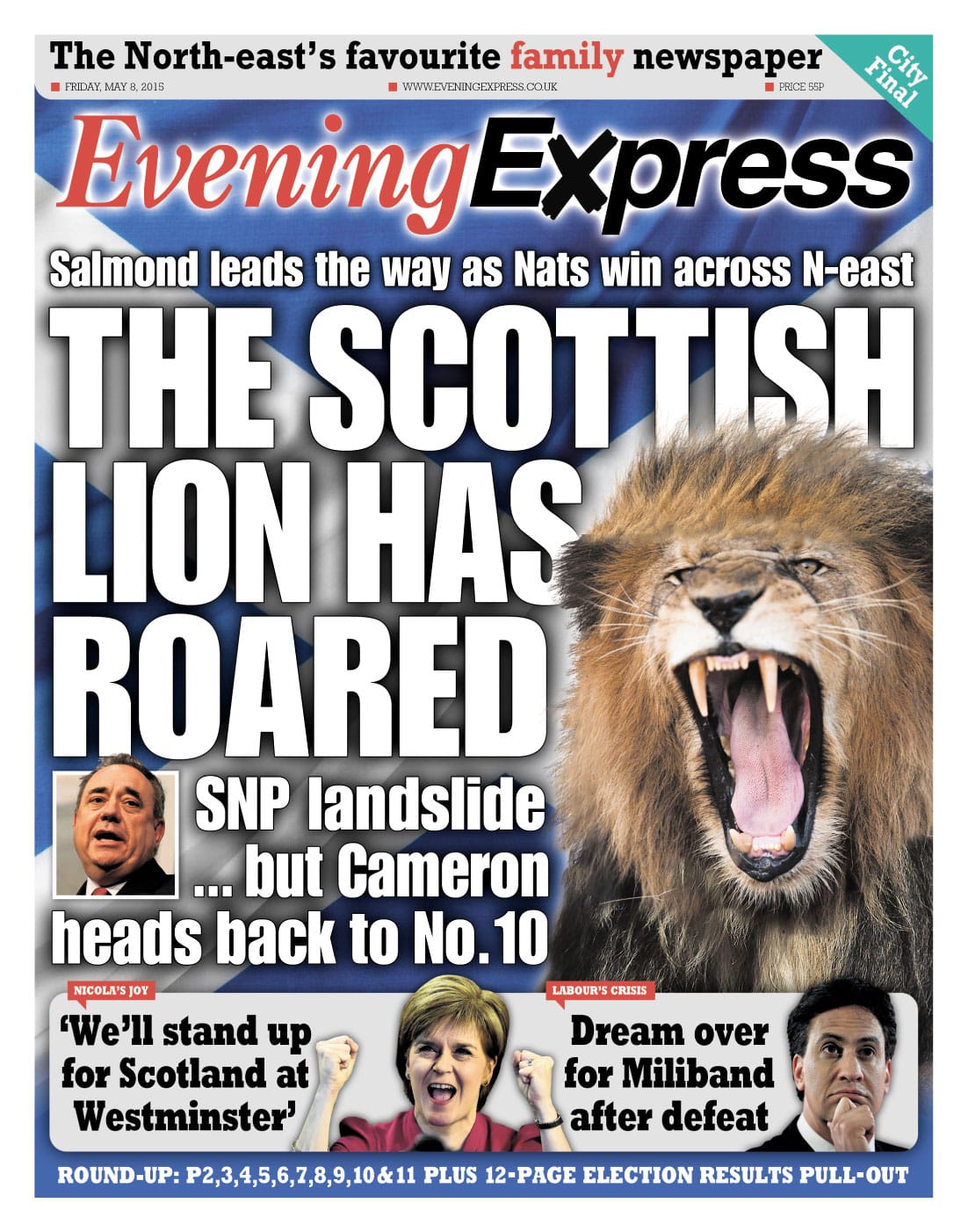
But the SNP landslide coupled with the Tory victory in England raised big questions about whether the country could remain united as well as highlighting a North-South political divide.
Both the Northern Echo and Newcastle Chronicle front pages reflected the fact that once again Labour had done well in the North-East while failing in the rest of the country.
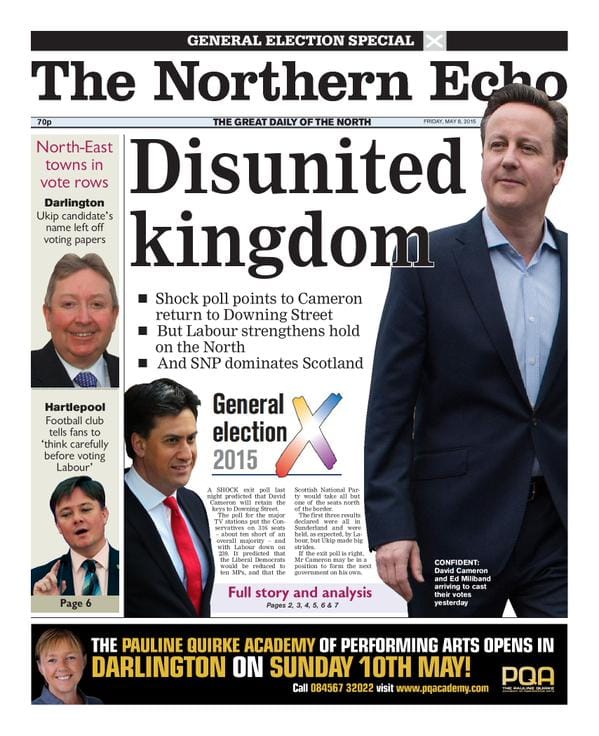
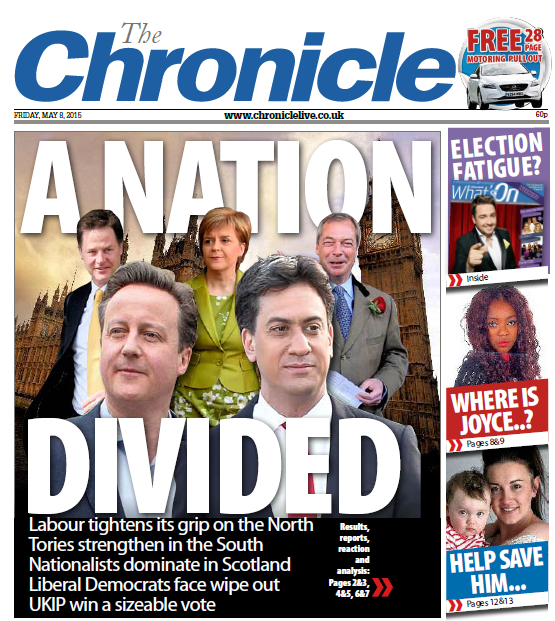
Elsewhere a number of daily print titles ran real-time results services and live blogs across their websites.
Trinity Mirror's coverage of the election also included totalisers and interactive maps in most of its regional centres.
Most of its sites, including the Manchester Evening News, Birmingham Mail, Liverpool Echo and WalesOnline, had a live rolling blog from the close of polls last night into this morning, featuring latest gossip, trends and results.
The publisher also ensured coverage by its regional titles was optimised for mobile phones because many readers were expected to be ‘second-screening’ with televisions.