
Fellow sufferers come forward after journalist reveals 'invisible disability'
Writer meets others with condition for first time
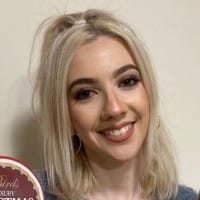
A regional journalist has made contact with fellow sufferers of her "invisible disability" for the first time after going public about living with the condition.
Derby Telegraph life writer Daniela Loffreda decided to open up about her experience with nystagmus, which is a constant involuntary horizontal movement of the eyes.
The condition means Daniela, pictured, is registered as partially sighted because she finds things like focusing on objects and screens difficult, as well as reading.
She is also severely longsighted, with astigmatism in her left eye and has developed strabismus due to the weakening of her eye muscles.
Opening up about her condition in a first-person piece for the Telegraph, Daniel wrote: "It was only when I sat down to write this piece, after toying with the idea for a good few months, that a glum reality hit home. In my arguably few 23 years on this planet, I’ve never met anybody who was born with nystagmus.
"That means I’ve never had anyone to share my experiences with who really understands. In fact, the closest to that is probably my optician, who has worked with me for 12 years.
"But perhaps what’s more concerning is how little I sometimes feel I know about my own visual impairment. But why is that? Since my early teens, I’ve found myself googling nystagmus and trying to understand it better.
"It's only in recent years that I’ve actually been able to pinpoint some of the most common effects of nystagmus. I try to avoid using the word suffer, I personally don’t like the connotations it carries, but the truth is that some days I do.
"I'd say the most frustrating part is the lack of independence it brings. I can’t legally drive with this visual impairment. My sister says I’m the best backseat driver she’s ever come across. But jokes aside, this can be tough as a 23-year-old trying to make a career as a reporter.
"I hate having to rely on people for lifts and waiting around for public transport. It can make you feel like an inconvenience and a liability."
Daniela went on to note that the condition, and the reaction of others to it both at school and in adulthood, had "taken a toll on my mental health over the last five years", but that it had also led her to realise she needed to be "open and confident" about her condition.
She added: "It’s allowed me to find and access the help and adjustments I need to perform at my best. I consider myself incredibly lucky to have the most supportive parents and sister, who have consistently told me that I’m more than capable of anything I put my mind to.
"I’m also very grateful to my university lecturers, work colleagues and managers who have taken the time to try and understand my condition and how it impacts me in an academic and professional setting."
Speaking to HTFP about the reaction she had received to the piece, Daniela said: "Putting my story out there was quite nerve-wracking, and I almost decided against it, but I'm so glad we published it in the end.
"I never expected so many people to get in touch. I've had emails and messages from people with nystagmus, as well as parents of children who have the condition, and are trying to understand it better.
"It's nice to know that sharing my experience has helped others."



