
Editors welcome new police guidance on ethnicity of suspects
Move could help stop false narratives spreading online
New police guidance that would see forces disclosing the nationality and ethnicity of suspects has been welcomed by the Society of Editors.
Interim guidance issued today by the College of Policing and the National Police Chiefs’ Council recommends that police forces should consider releasing the ethnicity and nationality of suspects at the point of charge.
The move is designed to help counter misinformation and disinformation in an age of rapid information spread via social media.
Decisions on whether to apply the guidance will still be left to individual forces and will vary depending on the circumstances of particular cases.
SoE chief executive Dawn Alford said: “In an age where speculation and false narratives can spread online with lightning speed, accurate, timely and clear communication and information from forces has never been more important.
"We welcome this step, which recognises the harm that can be caused when information vacuums are filled by rumour, conspiracy, and disinformation.
“The Society of Editors has long campaigned for greater transparency and communication in the criminal justice system which is vital for maintaining public confidence in the police and the courts.
“Today’s new guidance on releasing the ethnicity of suspects will help ensure that accredited news organisations can continue to keep the public informed of factual news and information as well as helping counter fake news that may be circulating elsewhere.”
Dawn said the guidance formed part of a wider review by the College of Policing, NPCC and media bodies, including the Society of Editors, into how communications and trust between officers and journalists can be restored.
“By empowering forces to better communicate and release more information to the media, this will help both public understanding and public confidence in the role of policing and how decisions are made," she added.
The NPCC said in a statement that it forces would be encouraged to disclose a suspect’s ethnicity and nationality when there is a policing purpose to do so - including reducing the risk to public safety and countering high levels of mis- or disinformation about a particular incident.
However the guidance makes clear that it is not the role of the police to verify a subject's immigration status, which remains a matter for the Home Office.
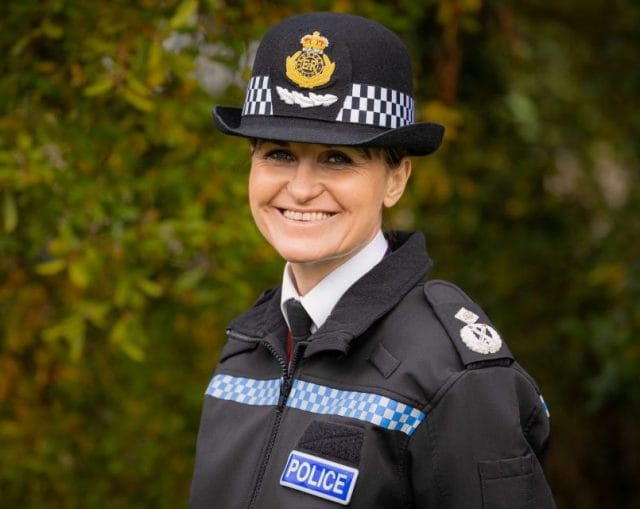
DCC Sam de Reya, pictured, NPCC lead for communications and media, said: “We saw during last summer’s disorder, as well as in several recent high-profile cases, what the major, real-world consequences can be from what information police release into the public domain.
“We have to make sure our processes are fit for purpose in an age of social media speculation and where information can travel incredibly quickly across a wide range of channels.
“Disinformation and incorrect narratives can take hold in a vacuum. It is good police work for us to fill this vacuum with the facts about issues of wider public interest.
“Our aim with this guidance is to provide greater consistency with how we report this information. Being as fair, consistent and transparent as we can will improve confidence in policing as the definitive source of this information – making all our communities safer in the process.”
Chief Constable Sir Andy Marsh, CEO at the College of Policing, added: “The public remains concerned about mis and disinformation so this interim guidance provides clarity that police can disclose the ethnicity and nationality of suspects when they are charged in high profile and sensitive investigations.
"I want to reassure the public that officers will continue to police without fear or favour. The interim guidance will bring consistency so information can be released for all ethnicities and nationalities when it meets the right criteria.
"Later this year the College of Policing will update its current authorised professional practice for media relations so that the public, journalists and police forces are clearer on how we all navigate today's challenging information landscape."



