
Editor defends paywalling of LDR content after rival title protests
Articles written by BBC-funded reporters placed behind paywall
A regional daily editor has defended its decision to place local democracy reporter content behind a paywall amid protests from a rival title.
The Manchester Evening News published an article about Greater Manchester mayor Andy Burnham written by six local democracy reporters in the paid-for 'premium' section of its website.
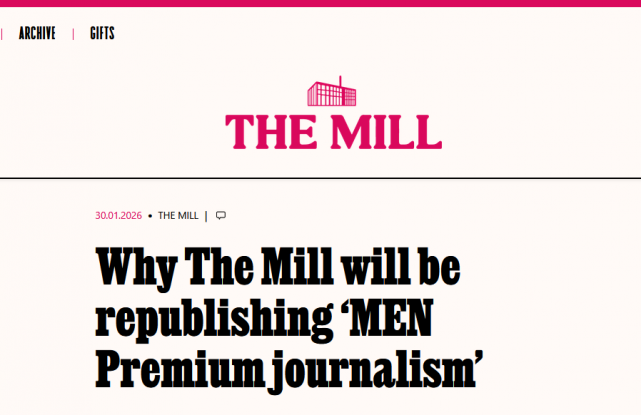
In what it called a 'petty act of protest,' rival title The Mill then republished the entire piece on its own site, arguing that content from the BBC-funded LDR scheme should be free-to-air.
It said it will continue to publish such content for free every time the MEN publishes "taxpayer-funded journalism under the guise of exclusive content.”
However MEN editor Sarah Lester has defended the paper's decision, saying it is up to individual publishers how LDR content is used.
She told Prolific North: "We are extremely proud of the content we produce for the scheme and it is inaccurate to suggest that putting LDR content behind a paywall is not allowed.
"The way the scheme works is that once the copy has been published to the BBC wire to be used by partners however they want, it is up to our newsroom to decide what to do with it. This could include putting it into the (paid for) paper or putting it behind a paywall.
“The premium articles cited are ones where significant additional newsroom resources have been deployed to develop in-depth features beyond straightforward council reporting. This includes commissioning, developing, and guiding the LDRs as well as editing their copy.
“We have chosen to share the complete packages with the LDR partners in keeping with our commitment to making the LDR scheme a success. Producing pieces like the ones referenced here take a significant amount of journalistic resource beyond the LDRs, so we are comfortable in publishing this as part of the content mix we serve our Premium readers.
“By ensuring we share full packages with LDR partners, we are providing a service above and beyond what we are contracted to do.”
A BBC spokesperson added: “Since the launch of the Local Democracy Reporting Service in 2018 we have been consistent that there is no barrier to any partner organisation charging audiences for access to content whether that is through a traditional print cover price, paywalls for selected stories or full subscription models.
“Content is freely available for all approved partners to use but it is down to individual businesses to decide how they share it with audiences.”
The Mill had earlier set out its case in an editorial headlined 'How a publicly-funded scheme is being misused.'
It read: “The MEN, which is owned by the stock-market-listed, London-based media conglomerate Reach PLC, is asking readers to part with their cash to read the piece. It was paywalled as part of their new Premium service, in which top-tier MEN content is accessible for £4.99 a month.
"This all seemed perfectly just: We’ve long made the case for people paying for journalism, and after all, sending six reporters into 10 boroughs to do 73 interviews doesn’t come cheap.
"‘This is a Premium article created exclusively for our subscribers,’ reads the tagline on the paywall. The only problem is, that’s an outright lie. The reporters on this piece are actually Local Democracy Reporters (LDRs), a publicly-funded scheme paid for by the BBC licence fee — ie. by all of us.
"Their articles are all sent to the relevant local news outlets, for free, for potential publishing. The Mill receives this content too, we just don’t choose to publish it. We certainly don’t try to charge you for it.
"This means the MEN didn’t pay the reporters who worked on this piece – you did. We found that over a dozen Premium MEN articles were written by LDRs just over the last month.”
"So, in an act of petty protest, to prove that this is not exclusive content, and that the MEN are effectively trying to make you pay for something you’ve already paid for, we are publishing the full piece for free today.
"And from now on, every time they try to mislead their readers by publishing taxpayer-funded journalism under the guise of exclusive content, we will be publishing it, again, for free on our website."



