
Editor calls on Labour to 'spare a thought' for local press
News chief urges government to direct advertising spend to industry
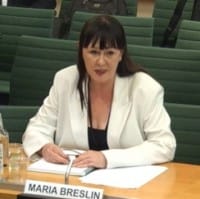
A regional daily editor has urged Sir Keir Starmer to direct more government advertising spend to the local press as Labour staged its annual conference on her patch.
With the party once again returning to Liverpool this week for its annual shindig, Liverpool Echo editor Maria Breslin took the opportunity to speak out on the industry's behalf.
While acknowledging that the future of regional journalism is not top of the political agenda, Maria said that it was "a conversation we need to have."
In an opinion piece, she argued that trusted local newspapers are fighting social media giants both for ad revenue and visibility.
Wrote Maria, pictured: "I hope Sir Keir Starmer, during his first conference as prime minister, spares a thought for our proud brand which has faithfully represented the city region for 145 years and other regional publishers across the country which remain trusted friends and sources of credible news for vast swathes of the electorate.
"Having a distinguished past does not guarantee us a bright future and nor should it. We have to earn our place in the media landscape and remain relevant to our readership. But, in a world dominated by tech giants, making our voices heard in a noisy digital environment presents definite challenges.
"As the editor of the Liverpool Echo I’ve spent a lot of time recently grappling with the violent disorder we saw on our streets and trying to comprehend how the senseless deaths of three little girls fatally stabbed at a Taylor Swift-themed dance and bracelet-making class were sadly, inexplicably and unscrupulously hijacked by extremists.
"As our reporters and photographers were out on the streets of Southport doing their job sensitively, more sinister, extreme forces were exploiting the horrors that unfolded that day spreading totally false news about the identity of a suspect already in police custody.
"From a highly dubious website to far more familiar channels we have a digital infrastructure that allows this disinformation to be disseminated with seemingly little challenge or retribution. The sad thing is so many people believe it. And that worries me.
"In the aftermath of that dreadful week commentators and government ministers across the board rightfully came together to praise local press - a rare, and welcome, pat on the back - and to decry the disinformation shared on social media.
"But the sad truth is we operate in a world where tech giants make big money from the content we lovingly produce and where peddlers of mistruths seemingly operate freely and without scrutiny.
"In the right hands that advertising revenue would strengthen brands like the Liverpool Echo and help ensure trusted news is free for all and not a nice-to-have based on the ability to pay.
Added Maria: "Let me be clear, while it suits some to portray the local press as a quaint thing of the past, we still have teeth and we still make a real difference to people’s lives on a daily basis. We command a far larger audience than we did a decade ago reaching many millions of people every single month.
"If we are going to take the lessons of the past months seriously we have to make positive choices because the reality is we are fighting against a tide of powerful social media giants on two fronts - both for ad revenue and for visibility for millions of viewers whose access to information is controlled even if they don’t realise it.
"To the government - it may be early days, but you can make a real difference to empower publishers such as the Liverpool Echo - proud brands which have impacted real change.
"The last government spent very little of its advertising budget with us with statistics suggesting it invested more than five times as much with Facebook and Google. You have the opportunity to make a real difference.
"To the wider advertising industry - fake news has consequences so please don’t help fund lies and disinformation. Just like us, your brands and products want to reach communities effectively and identify as a force for good in society.
"By spending your advertising budgets with trusted local news publishers you can actually achieve both."
Speaking at a fringe meeting last night, culture secretary Lisa Nandy praised the role that local newspapers had played during the summer riots.
She said: “We have got to make sure that those local newspapers and regional newspapers are protected, not least because when there was so much disinformation online, it was often local journalists who were first on the scene and saying that’s not what’s happening here.
“They were penetrating that disinformation, mythbusting for people, helping to create calm in communities and we lose them at our peril.”
Ms Nandy, whose department oversees media policy, told the meeting she was engaging with tech companies to encourage them to give greater prominence to local news stories.
She said: “One of the issues is that the big online companies like the Googles and the Facebooks often don’t promote their content like they promote others.
“We need to provide a fair playing field for local and regional papers.”



