
Dyson at Large: The passionate debate about shorthand
Our blogger looks at the arguments for and against NCTJ proposals
One of the best things about the UK media is the National Council for the Training of Journalists (NCTJ) – upholding widely-respected benchmarks for skills and standards since 1951.
The majority of today’s journalists – especially in newspapers – were only able to enter the trade after passing four mandatory building blocks of competence on NCTJ-accredited courses: reporting, law, public affairs and shorthand.
For many that last subject – shorthand – was the biggest and sometimes most frustrating challenge, often involving daily 9am-10am sessions for months to work up the wrist-aching frenzy needed to pass the 100wpm exam that employers demanded.
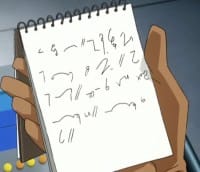
But once passed, the skill became a crucial, flexible and reliable tool, enabling journalists to record what anyone was saying – in any situation – using nothing more technical than a pencil and paper.
It’s perhaps this background to so many careers that’s led to such a passionate debate about shorthand, following the NCTJ’s proposals to make that skill an optional one for some students.
Everything changes, of course, and over the years other elements have been added to the current Diploma in Journalism which now includes media regulation and ethics as part of its core modules.
But the proposed structure for the new Diploma – created after an in-depth review – only has three ‘mandatory skills’ modules: media law and regulation; journalism (including digital, data and social journalism, as well as traditional news writing); and ethics.
The details describe how students will then have to choose at least one of the following six ‘sector skills’ modules, also termed ‘pathways’ by the NCTJ:
- advanced digital journalism;
- broadcast journalism;
- news journalism;
- magazine journalism;
- PR and communications; and
- international journalism.
All other modules – including shorthand – are termed ‘elective skills’, which means that would-be journalists may no longer have to worry about Teeline (nor, for that matter, public affairs, but that’s another story!), depending on their chosen pathways.
This is no issue for some, including David Higgerson, digital publishing director for Trinity Mirror’s regional titles, whose blog on the subject was headlined: ‘The long and short of shorthand is this: it’s useful, but not proof that you can be a journalist in 2015’.
He argued: “A reporter going to court surely needs shorthand, a sports writer who feels confident relying on their mobile phone for interview transcripts probably doesn’t. A brilliant social media editor will not be defined by whether they can do 100 words a minute shorthand.”
But others appear more concerned at the proposals, including Graham Dudman, The Sun’s former managing editor, now a consultant at News Associates, officially the NCTJ’s top journalism school.
He blogged: “A reporter isn’t the finished article until they’ve passed their NCTJ shorthand at 100 words a minute. Why?
“Because the ability to write down what somebody says at the same time they’re saying it then read your note back instantly is essential … Smartphones are wonderful devices but listening to and transcribing an interview takes way longer than reading a shorthand note which could mean failure in a race to a deadline.”
Leo Whitlock, editor of the Kentish Gazette, described the wider essentials of shorthand in a blog published before the NCTJ's proposals were launched.
He wrote: “It’s reassuring to know the reporter answering the phone to someone with a tip off, an eyewitness account or a complaint will be able to take the details down and relay them to you, accurately, in an instant.
“You know you can send a reporter with 100wpm shorthand armed with just a pen (possibly a spare) and a notebook to a council meeting, court case, film premiere and to an all-important interview and be certain they will come back with the story.
“It will not matter one iota if the battery died in their dictaphone or smartphone, if background noise drowned out the key quote or if they thought they had pressed record when they had not. They will not be fazed by the unfriendly football manager holding his post-match press conference close to the groundsman cutting the grass.
“They will be able to transcribe the killer quotes for a breaking news story quickly and accurately without forwarding and rewinding, forwarding and rewinding the audio they have collected. Shorthand can only help them to break news before their rivals, vital in every marketplace.”
It’s worthwhile emphasising that the NCTJ has no intention of abandoning shorthand; it’s simply proposing to make it a choice rather than a compulsion for its Diploma, unless you’re taking the ‘news journalism’ pathway where it’s still required.
But there is concern that by making shorthand ‘elective’ many students may be able to do just that: select a sexier-sounding pathway – ‘international journalism’ sounds good, for example, as does ‘advanced digital journalism’ – with no requirement for shorthand.
That’s fine, some might say, shorthand’s not essential in such roles, although others would argue that any journalist will, at some point, have to interview to verify digital facts, provide balance, add human interest colour or get off-the-record guidance – which is when shorthand’s so useful.
And what’s to stop a student taking the non-shorthand route but then later applying for and getting a newsroom role that needs it?
No-one wants this to result in any confusion about what’s currently a universally-accepted ‘gold’ standard, but that's the worry for some, as summarised by a media employer who told me: “There should be space for all the skills – old, new and emerging – but we shouldn’t cast off seven decades of tradition on a whim …
"Right now I know I can trust an NCTJ Diploma as gold standard – I know what I’m getting. If some are allowed to opt in and out around different pathways … that kitemark could be devalued …
"Our biggest concern is devaluing the qualification and seeing some students … being taught the ‘NCTJ Lite’ (non shorthand) and getting into the workplace and finding out they’d wasted their money.”
A little mischievously, I ran a quick survey on the proposed changes via @stevedyson on Twitter on Saturday 28 November, asking: ‘Should shorthand remain one of the compulsory core skills for @NCTJ_news diploma?’.
Of 173 people who voted, 68pc said ‘Yes’ and a mini-Twitter storm ensued, although it must be said that the survey question offered little background.
Today’s blog is my attempt to provide that context, and if you’re interested you should read all the consultation information and send your views to lyn.jones@nctj.com by 15 January 2015.
For what it’s worth, here’s my feedback: the NCTJ (for whom I regularly work and have great respect) is right to be proposing a newly-shaped Diploma that caters for all media sectors and journalism jobs, not just newspapers.
But is it absolutely necessary to make shorthand non-mandatory for five out of six ‘pathways’ leading to the Diploma?
Shorthand could be retained as a must-have for all students, making their skills even more marketable and flexible in a fast-changing media world – and at the same time preserving positive perceptions of the NCTJ’s ‘gold’ standard.
Even if all the proposed changes go ahead, stronger language is arguably needed for the labels outlining the new structure.
Shorthand could, for example, still be listed under the ‘mandatory’ section, with brackets explaining that it can only become ‘elective’ under certain circumstances – which might make students think more carefully before avoiding it.
And the resulting Diploma could be given specific titles depending on the different skills it’s taken to achieve, making sure its value is unequivocal to all in the marketplace.



