
Don't put all your eggs in digital basket, lecturer urges BBC
'For many, the regions are the face of the BBC'
A former regional BBC executive has urged the corporation's new boss to defend its 'localness' amid fears that regional TV and radio services could be cut back.
Kester Denmar, pictured, worked as an assistant editor on BBC East Midlands Today before becoming a journalism lecturer at the University of Leicester.
He is urging new director-general Matt Brittin to resist the temptation to make further cuts to local services in order to invest in digital services.
Kester argued that for many people, regional programmes are the "face" of the BBC and the way that they are most likely to connect with the organisation.
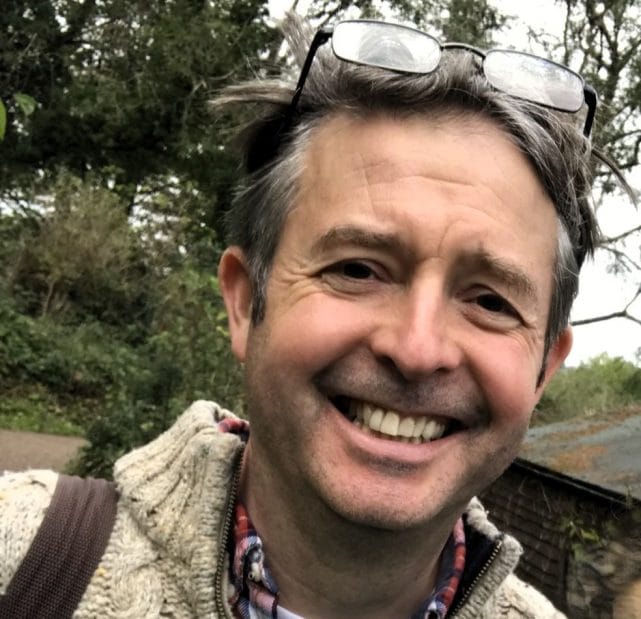
Kester, pictured above, makes the case for regional programming as part of a series of open letters to Mr Brittin, who took over as D-G on 18 May.
They have been compiled in a new book entitled Letters to Matt Brittin, edited by John Mair and Andrew Beck, extracts of which we are publishing on HTFP.
Wrote Kester: "Please DG, don’t put all your corporate eggs in one digital basket. Just as some of us still like using cash in shops and pubs rather than waving our phones at terminals, some people still like local content provided by friendly faces and voices.
"Yes, radio listening numbers are dropping — what do you expect when you merge services. Of course regional news audiences are falling — what do you expect when teams are squeezed and content becomes bland?
"Don’t think the audiences you are attracting online will somehow migrate when they hit 50 to listening to local radio or watching local TV news. They won’t. Audiences must be nurtured and grown with love and care.
"My worry is, as you face a squeezed income, you will look around to cut more and to cut locally. But for many people the regions are the face of the BBC. It is how they are most likely to connect with the organisation.
"Unfortunately, the cuts in local services have already begun. Open centres have been closed, local programme commissions have been reduced, radio services merged across county boundaries, single-headed news presenting.
"Too often I saw those higher up within the organisation fail to defend this localness. They failed in their duty to stand up for the BBC against the constant avalanche of abuse and derision it has always been subjected to.
"Someone must stand up for the BBC, for its localness, its connections with the regions and the people which fund it. That person needs to be you.
"Let the American mega corporations fill their boots making multi-million dollar one-hit-wonder dramas and let the BBC concentrate on what it does so differently, so quietly, so unassumingly, without trumpet blast or bugle. Focus on providing the connectivity of communities within the nations and regions."
Kester's piece can be read in full below.
Dear DG,
Congratulations on the new position or should that be commiserations? It always seems to me the position is more than a poisoned chalice—something akin to a shedload of trouble from which there seems to be, in recent years at least, only one way out and that is through resignation. There’s a touch of King Henry’s six wives about recent incumbents:
Resigned – Greg Dyke
Retired – Mark Byford, interim DG
Survived – Mark Thompson
Resigned – George Entwistle
Survived – Tony Hall
Resigned – Tim Davie
Survived – Rhodri Talfan Davies, interim DG
Who knows? – Matt Brittin
Looking at past form you may get sacked, resign, or perhaps even survive but you are arriving at a pretty important moment (they always are at the BBC). There will be plenty of outsiders wanting to see you fail for myriad reasons but from my years inside the organisation you would do well to keep an eye out for the players on your side scoring own goals. As you’ll be aware, there have been plenty of occasions where the Beeb has shot itself in one foot or the other and occasionally straight though the head. The list is formidable and includes sex pests, paedophile presenters, deceitful reporters, bias, and executive extravagance.
It might sound as if I am not keen on the organisation but that couldn’t be further from the truth. I joined in 2001 and only meant to stay two years. But you know how these things are. I remained working in local television news for almost 20 years. And I enjoyed most of that time, especially when trusted to get on with what I did best, which was produce creative, engaging, and relevant content. Thank you, BBC, for the trips abroad and the awards.
I only left because another wave of savings plans was washing over us in the regions. We had been through it all before, through schemes meant to streamline services or upskill staff all of which usually had the goal of saving money. For example, I witnessed the removal of national news producers from our regional newsrooms, and the experiment in personal digital production where reporters became camera crews and camera crews were trained as reporters. When that experiment was all over, and millions of pounds had been invested in the training and technology, the BBC turned round and took all the kit away.
As Covid looked like it was finally being supressed the next streamlining missive arrived. Incidentally, Matt, we reported on the pandemic with extreme professionalism and dedication. The reward for such an effort? The announcement of hundreds of job cuts and more reorganisation. Marvellous. Like many colleagues of a certain age I opted for voluntary redundancy rather than stay and put myself through another round of shrinkage: shrink the budget, shrink the workforce, shrink the opportunity, shrink the ambition, shrink the creativity, shrink the localness of local broadcasting.
Of course, things change, winter becomes spring and spring turns to summer, and nature adapts just like the BBC does to shifting environments. But that doesn’t mean the BBC should abandon its core audiences or stop providing specific services such as local radio and television. Sadly, that’s what has happened over the years. Radio coverage merged, and local television opt-outs closed in the name of ‘digital first’.
Please DG, don’t put all your corporate eggs in one digital basket. Just as some of us still like using cash in shops and pubs rather than waving our phones at terminals, some people still like local content provided by friendly faces and voices. Yes, radio listening numbers are dropping—what do you expect when you merge services. Of course regional news audiences are falling—what do you expect when teams are squeezed and content becomes bland? Don’t think the audiences you are attracting online will somehow migrate when they hit 50 to listening to local radio or watching local TV news. They won’t. Audiences must be nurtured and grown with love and care.
My worry is, as you face a squeezed income, you will look around to cut more and to cut locally. But for many people the regions are the face of the BBC. It is how they are most likely to connect with the organisation. Once upon a time we opened our buildings and invited them in to show them what their licence fee provided: the local voice, the friendly reassurance, the news from their village or town.
Unfortunately, the cuts in local services have already begun. Open centres have been closed, local programme commissions have been reduced, radio services merged across county boundaries, single-headed news presenting. What next? Perhaps an English Regions News Hub providing centrally produced content for all local areas? ITV has been doing something like this for several years. Don’t be tempted. The results are most unsatisfactory: national stories forced into a local format with unidentifiable case studies, clearly not from the region, handed to every programme to broadcast with a local twist to sugar the rather unappetising pill. These items stand out like a sore thumb from the locally produced content. But you can see the attraction of one story for all regions. But don’t be tempted.
Of course, there may be no future for local radio stations and regional news programmes on the BBC. It may already have been decided (perhaps you flagged it up as a money-saving wheeze at your job interview?) that they should be allowed to wither and, like our regional press, move online. Figures for many online newspapers are impressive and at first might look alluring. But beware the siren voices. Even a brief dive into online content soon shows much of it to be bland, irrelevant clickbait, often mass-produced from a central hub and versioned like shared ITV News stories, flagged as local but no more local than I am likely to be the next DG but one.
It has often been said the BBC brings the nation together, that at times of national disaster or celebration everyone turns to the Corporation as their source of information. This is true at a local level. Where better to go for information about local flooding, closed schools or to support a local football team. It is something the BBC across the regions and nations has done very successfully for many years.
Some mendacious voices would have you believe the BBC is full to the rafters of left-wing radicals, that it is biased, privileged, and bloated on public money. Perhaps it is. But in all my years working with hundreds of different people I did not see any evidence of this. On the whole, I saw dedicated local teams trying their best every day to connect to their audiences and provide relevant, entertaining, and authoritative output.
Too often I saw those higher up within the organisation fail to defend this localness. They failed in their duty to stand up for the BBC against the constant avalanche of abuse and derision it has always been subjected to. I don’t see an end to the carping voices who will always look to undermine the BBC because they are jealous of the funds, of the reach it has, of the local connections it has forged, of the loyalty it has created, and the trust others have in it. They are bound to keep moaning wherever they are in the political spectrum. That is one core virtue of the BBC. It has the freedom to annoy and disrupt the prejudices of vested interests. It should use this privileged position to fill the space left by cuts in other local media. It should tread bravely where others cannot go and it should be led bravely because no other media organisation has the power or opportunity to venture along the path of localness. If Sky does take over ITV how long before another round of reorganisation within its local newsrooms? Another retreating step for localness? Be brave, fill the void left by others.
Someone must stand up for the BBC, for its localness, its connections with the regions and the people which fund it. That person needs to be you. You will need to defend its income and its reason for being. Let the American mega corporations fill their boots making multi-million dollar one-hit-wonder dramas and let the BBC concentrate on what it does so differently, so quietly, so unassumingly, without trumpet blast or bugle. Focus on providing the connectivity of communities within the nations and regions. Perhaps then, dear DG, you may be afforded the luxury of being able to leave the post you have just assumed at a time and in a manner of your own choosing.
Kind regards,
Kester Demmar
- Dr Kester Demmar is a Journalism lecturer and programme director at the University of Leicester. His television career began at Central in Birmingham where he was a runner on The Cook Report, and as a researcher on the popular late night show Central Weekend, before squeezing his way into the local newsroom. From 2001 he worked as an Assistant Editor at the BBC, mainly on the regional news programme East Midlands Today, but also in Oxford and Birmingham.



