
Ambulance bosses to only tell journalists about 'very serious' incidents
Editor warns policy will spark "wild speculation"
An editor has criticised plans by the ambulance service to stop giving details to journalists about incidents unless they are deemed "very serious".
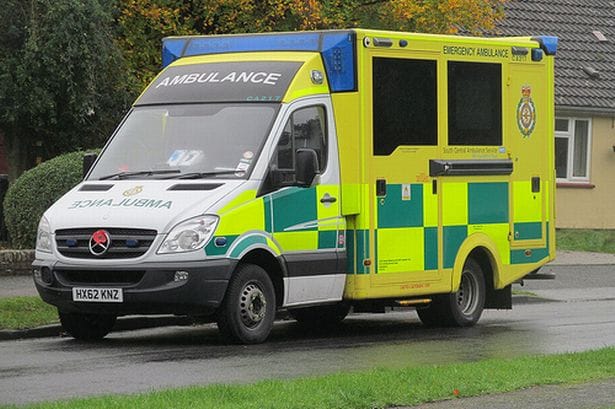
South Central Ambulance Service has announced it will no longer offer information about "less serious or smaller scale incidents, or general sightings of our ambulances or local air ambulances".
Instead, SCAS has told journalists it will only provide details about "major or very serious incidents of which the public may need to be aware".
According to the service, a "major or very serious incident" is determined by whether there is a "high number of patients, high number of resources or significant local disruption".
SCAS says its press office is covered by only one person and the decision has been made because there is "a limit on what we can be reasonably expected to respond to".
The decision, which affects journalists working in Berkshire, Buckinghamshire, Oxfordshire and Hampshire, was announced in an email by SCAS media and communications manager David Gallagher.
In the email, he wrote: "Due to the increasing demand on our 999 service and the corresponding increase in enquiries about incidents of all types that we may have attended, we will no longer be providing details about less serious or smaller scale incidents, or general sightings of our ambulances or local air ambulances as we have previously done during office hours.
"We attend around 1,500 emergency 999 incidents a day across our four counties and from 11 July we will only focus on providing information to the media about major or very serious incidents of which the public may need to be aware."
One editor affected by the decision but who wished to remain anonymous has warned the decision by SCAS will lead to "wild speculation" among members of the public.
Speaking to HTFP, they said: “This is a worrying development from a public service. The public have a right to know what their money is being spent on – and whether a service is operating in an efficient manner.
"Journalists asking questions from the media team are only representing the greater public.
"Seeing an emergency vehicle in your street or seeing several outside a school or in a town centre for example is quite frankly alarming and many readers turn to their local newspaper to ask them to find out what has happened.
"Many times it is not possible to assess the severity of a public incident, without first asking for information. Communication between the press office and news outlets is key to this.
"Verified news articles also prevent wild speculation on social media. This new regime will limit the information the public receives at a time when public health has never been so important.
"With the service under increasing pressure, and ambulance wait times growing longer by the day, one has to question the motives behind it.”
According to SCAS, similar policies have been adopted by other ambulance services across the country and it is happy to provide "further clarity" for affected journalists on the types of enquiries it will no longer respond to.
Examples include "we’ve been told the air ambulance landed at X place", "we’ve seen a tweet from the fire service – did you attend also", "I drove passed an upturned car at X road and wondered if you can tell me what happened" and "heard reports about an incident in X can you tell me more".
A spokesman for the service said: "The press office is covered by one person who has a wide remit to respond to a range of other media enquiries, support our staff and volunteer communication, support regional and national NHS and public health campaigns and promote some of the innovative clinical and operational developments and research we are carrying out.
"There has to be a limit on what we can be reasonably expected to respond to in terms of incidents given the capacity we have but we wanted to engage openly with our contacts about this rather than simply announce one day we wouldn’t be responding to something we might have assisted with in the past.
"This could have left contacts confused and frustrated as to why they may have received a response to something similar on a previous occasion."



